Today's
EarthStation1.com 15% (Or More!) Off Commemorative Memorial Title:
Dead End Kids: A Story Of Nuclear Power Film Satire DVD, Download,
USB
Today, November 7, 2026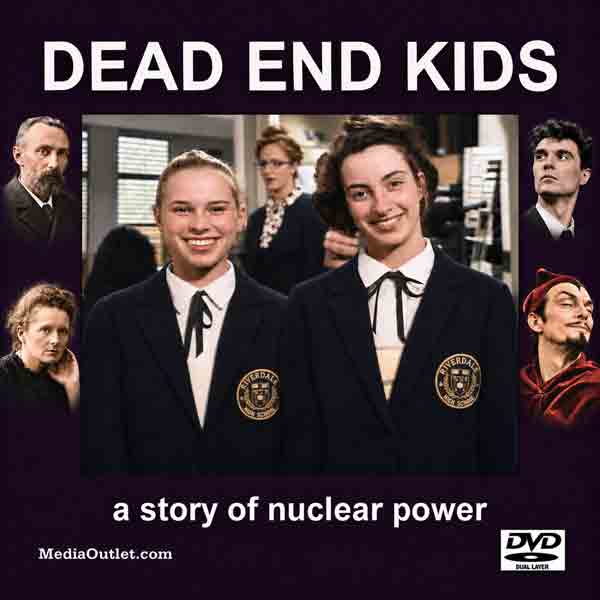
November 7: The International Day Of
Medical Physics: -- November 7, 1867: #BOTD: #HBD! Marie Curie,
French-Polish physicist and chemist, Nobel Prize laureate (d, July
4, 1934) is #born Maria Salomea Sklodowska in Warsaw, Congress
Poland, Russian Empire. Marie Salomea Sklodowska-Curie was a
Polish and naturalized-French physicist and chemist who conducted
pioneering research on radioactivity. She was the first woman to
win a Nobel Prize, the first person and the only woman to win the
Nobel Prize twice, and the only person to win the Nobel Prize in
two scientific fields. Her husband, Pierre Curie, was a co-winner
on her first Nobel Prize, making them the first ever married
couple to win the Nobel Prize and launching the Curie family
legacy of five Nobel Prizes. She was, in 1906, the first woman to
become a professor at the University of Paris. She was born in
Warsaw, in what was then the Kingdom of Poland, part of the
Russian Empire. She studied at Warsaw's clandestine Flying
University and began her practical scientific training in Warsaw.
In 1891, aged 24, she followed her elder sister Bronislawa to
study in Paris, where she earned her higher degrees and conducted
her subsequent scientific work. In 1895 she married the French
physicist Pierre Curie, and she shared the 1903 Nobel Prize in
Physics with him and with the physicist Henri Becquerel for their
pioneering work developing the theory of "radioactivity"-a
term she coined. In 1906 Pierre Curie died in a Paris street
accident. Marie won the 1911 Nobel Prize in Chemistry for her
discovery of the elements polonium and radium, using techniques
she invented for isolating radioactive isotopes. Under her
direction, the world's first studies were conducted into the
treatment of neoplasms by the use of radioactive isotopes. In 1920
she founded the Curie Institute in Paris, and in 1932 the Curie
Institute in Warsaw; both remain major centres of medical
research. During World War I she developed mobile radiography
units to provide X-ray services to field hospitals. While a French
citizen, Marie Sklodowska Curie, who used both surnames, never
lost her sense of Polish identity. She taught her daughters the
Polish language and took them on visits to Poland. She named the
first chemical element she discovered polonium, after her native
country. Marie Curie died aged 66 at the Sancellemoz sanatorium in
Passy (Haute-Savoie), France, of aplastic anemia (a disease in
which the body fails to produce blood cells in sufficient numbers)
caused by exposure to radiation in the course of her scientific
research and in the course of her radiological work at field
hospitals during World War I. She was buried in the cemetery of
Sceaux in the Hauts-De-Seine department of the southern suburbs of
Paris, France, alongside her husband Pierre. Their coffins each
contained a lead lining 2,5 mm thick because of their remains are
radioactive. Sixty years later, in 1995, in honour of their
achievements, the remains of both were transferred to the Paris
Pantheon. She became the second woman to be interred at the
Pantheon (after Sophie Berthelot) and the first woman to be
honoured with interment in the Pantheon on her own merits. Because
of their levels of radioactive contamination, her papers from the
1890s are considered too dangerous to handle.[80] Even her
cookbooks are highly radioactive. Her papers are kept in
lead-lined boxes, and those who wish to consult them must wear
protective clothing.[81] In her last year, she worked on a book,
Radioactivity, which was published posthumously in 1935.In
addition to her Nobel Prizes, she has received numerous other
honours and tributes; in 1995 she became the first woman to be
entombed on her own merits in the Paris Pantheon, and Poland
declared 2011 the Year of Marie Curie during the International
Year of Chemistry. She is the subject of numerous biographical
works, where she is also known as Madame Curie. On Sale Until
Midnight Tonight PT!
https://store.earthstation1.com/dead-end-kids-a-story-of-nuclear-power-1986-dvd-history-sa1986.html
Today's
EarthStation1.com 15% (Or More!) Off Commemorative Memorial Title:
The Nobel Century Nobel Prize History TV Series DVD, MP4, USB
Stick
Today, November 7, 2026
November 7: The International Day Of
Medical Physics: -- The International Organization for Medical
Physics (IOMP) organized this annual event in 2012 in honor of
Marie Sklodowska-Curie's birthday on this date. Also known as
Madame Curie, she is best known for her pioneering research on
radioactivity. Raises awareness about the role that physics play
regarding patient care. It's also a day to acknowledge important
medical physicists throughout history. Physics is the science that
studies matter, motion, an energy. It's known as one of the most
fundamental scientific disciplines. The main goal of physics is to
study how the universe behaves. The study of physics is very
beneficial to humans. Thanks to physics, we learn about how
electricity, sound, gravity, inertia, and heat works. Medicine is
another area that physics benefits humans. Sometimes the use of
medicine in physics is referred to as biomedical physics or
applied physics in medicine. One area in which physics greatly
benefits medicine is radiology and nuclear medicine. Both of these
areas of medicine allow for important diagnostic tests, such as
MRI, CT scans, x-rays, and ultrasounds. These kinds of tests make
it possible to see the inside of the body, which is invaluable for
a proper diagnosis. Radiation therapy is another area of great
importance as it helps in the treatment of cancer. Medical physics
has also helped further research, testing, and treatment in other
areas of medicine. These areas include cardiology,
neurophysiology, audiology, and physiological monitoring. On Sale
Until Midnight Tonight PT!
https://store.earthstation1.com/the-nobel-century-nobel-prize-history-tv-series-dvd-mp4-us4.html
Today's
EarthStation1.com 15% (Or More!) Off Commemorative Memorial Title:
The X Planes TV Documentary Series DVD, MP4, USB Drive
Today, November 7, 2026
November 7: Pancho Barnes Day: --
November 7: Aviation: The History Of Aviation: The History Of
Civil Aviation: Pancho Barnes Day: -- Members of the Ninety-Nines
and their families talk to attendees at The Happy Bottom Riding
Club historical site, the location for the annual USAF Test Pilot
School/Edwards Air Force Base Pancho Barnes Day celebration
(established in 1980). A barbecue is held and drinks are served,
along with dancing and live music in remembrance of this aviation
pioneer and friend. Family hour extends until approximately 9 pm,
after which it is an adults-only party, perhaps in remembrance of
the raucous old days of Happy Bottom Riding Club. Pancho Barnes,
pioneer aviator and a founder of the Associated Motion Picture
Pilots, the first movie stunt pilots' union, famous as the owner
of the Happy Bottom Riding Club, a bar and restaurant in the
Mojave Desert, Southern California, catering to the legendary test
pilots and aviators who worked nearby at what is now Edwards Air
Force Base, raced in the Women's Air Derby and was a member of the
Ninety-Nines, officially known as Ninety-Nines: the International
Organization of Women Pilots, an international organization that
provides networking, mentoring, and flight scholarship
opportunities to recreational and professional female pilots. As
of 2018, there are 155 Ninety-Nines chapters across the globe,
including a 'virtual' chapter, Ambassador 99s, which meets online
for those who are too busy or mobile to be in one region for long.
Pancho Barnes (July 22, 1901 - March 30, 1975) was born Florence
Leontine Lowe to Thaddeus Lowe II (1870-1955) and his first wife,
Florence May Dobbins, in Pasadena, California. Her life and
personality were portrayed in the 1983 epic film The Right Stuff,
adapted from Tom Wolfe's bestselling book of the same name. In
1930, she broke Amelia Earhart's air speed record. Florence Lowe
Barnes was born to a wealthy family, growing up in a huge mansion
in San Marino, California. During her formative years, she
attended the area's finest private schools. Her father, an avid
sportsman, encouraged her to appreciate the great outdoors, and
Florence became an accomplished equestrian. Her grandfather was
Thaddeus S. C. Lowe, who had pioneered American aviation with the
establishment of the nation's first military air unit, The Army Of
The Potomac's balloon corps during the American Civil War. He took
his granddaughter to an air show when she was 10 years old. In
1919, Florence married Reverend C. Rankin Barnes of South
Pasadena, California, and they had a son, William E. Barnes. Her
mother died in 1924. Having spent four months abroad in Mexico,
getting caught up with revolutionaries and escaping the attention
of authorities, disguised as a man, she began to use the nickname
"Pancho" around this time. Barnes returned to San
Marino, California, with an inheritance bequeathed to her on her
parents' death. In 1928, while driving her cousin Dean Banks to
flying lessons, she decided to learn to fly, and convinced her
cousin's flight instructor, Ben Caitlin, a World War I veteran, of
her desire that same day. She soloed after six hours of formal
instruction. Barnes ran an ad-hoc barnstorming show and competed
in air races. Despite a crash in the 1929 Women's Air Derby, she
returned in 1930 under the sponsorship of the Union Oil Company to
win the race - and break Amelia Earhart's world women's speed
record with a speed of 196.19 miles per hour (315.74 km/h). Barnes
broke this record in a Travel Air Type R Mystery Ship. After her
contract with Union Oil expired, Barnes moved to Hollywood to work
as a stunt pilot for movies. In 1931, she started the Associated
Motion Picture Pilots, a union of film industry stunt fliers which
promoted flying safety and standardized pay for aerial stunt work.
She flew in several air-adventure movies of the 1930s, including
Howard Hughes' Hell's Angels (1930). Barnes had extensive
connections in Hollywood. Her early close friend George Hurrell
(1904-1992), then eking out a living as a painter and photographer
in Laguna Beach, California, would later become the legendary head
of the portrait department of MGM Studios. Barnes is credited with
helping Hurrell start his career in Hollywood after he took the
photo she was to use on her pilot's license, introducing him to
her Hollywood friends. In a short period of time, Hurrell became
the most in-demand photographer in Hollywood. Barnes lost most of
her money in the Great Depression. By 1935, she had only her
apartment in Hollywood left. She sold it, and in March 1935 bought
180 acres (73 ha) of land in the Mojave Desert, near the Rogers
dry lake bed and the nascent Muroc Field, then called March Field
because it was an adjunct property of March Army Air Base at that
time. On her land, Pancho Barnes built the Happy Bottom Riding
Club, also known as the Rancho Oro Verde Fly-Inn Dude Ranch, a
dude ranch and restaurant which catered to airmen at the nearby
airfield and her friends from Hollywood. Barnes became very close
friends with many of the early test pilots, including Chuck
Yeager, Robert Anderson "Bob" Hoover, Walt Williams,
Jack Ridley, General Jimmy Doolittle, Buzz Aldrin, North American
Aviation flight test mechanic Bob Cadick, and flight test
supervisor Roy Ferren. Barnes' ranch became famous for the parties
and high-flying lifestyle of all the guests. After successful
flight trials, the Muroc and Edwards test pilots often enjoyed
some good times at the Happy Bottom Riding Club. As proprietor,
Barnes would offer them a customary free steak dinner for breaking
the sound barrier. A change of command in 1952, however,
contributed to Barnes getting into a conflict with the United
States Air Force (USAF) after General Albert Boyd, an admirer and
friend of Barnes, assumed command at the base; he would thereafter
berate her if her clientele came too close to military airspace
and flight paths. The USAF was planning for the future of
aviation, and decided it needed to build a new, super-long runway
to accommodate new aircraft that were being planned to run on
atomic power. That new runway would run directly across her ranch.
The USAF originally offered her a price for her ranch, land, and
facilities that was very close to the cost of undeveloped desert
land. She requested a fair appraisal to better reflect the actual
cost of replacement of her land and business, but in the midst of
getting a re-appraisal, the base leadership accused her of running
a house of ill-repute on her ranch. The effect of even the hint of
impropriety resulted in her ranch and business being put
off-limits to military personnel, and the value of her business
plummeted. Barnes then filed a lawsuit against the USAF to, as she
put it, "Roust out the scoundrels in the government who would
perpetrate such an injustice." She knew that if she filed a
lawsuit, she would have the opportunity to depose under oath the
various leaders and personnel on base, and the truth would come
out and clear her name. During the height of the intense court
battle, in 1953, her ranch burned in a fire of mysterious origin.
After the fire, the value of her ranch and business further
plummeted to a level more closely reflecting the original buy-out
offer from the USAF. Nonetheless, the court battle continued.
Barnes was determined to receive fair value for her land and
business, and to clear her name. A main contention of her case
was: "My grandfather founded the United States Air Force."
On that argument, the court found in her favor and she was awarded
375K USD remuneration for her property and business. Also, her
name was cleared. As it turned out, the proposed runway was never
built. After the government bought her out, she moved to Cantil,
California, in hopes of restarting a similar dude ranch business
there. It never happened. It was not until the late 1960s that
Barnes once again became a commonplace figure at the base and
began to be referred to as the "Mother of Edwards AFB."
The wounds began to heal as Barnes reconnected with many
old-timers. The officer's mess at Edwards was renamed the Pancho
Barnes Room. Barnes suffered from breast cancer, likely the
ultimate cause of her death. She was scheduled to be the keynote
speaker at the Antelope Valley Aero Museum's annual "Barnstormers
Reunion" on April 5, 1975. However, when a friend called on
March 30, 1975, she could not reach her. Her son Bill found her
dead in her home, and the coroner determined that she had died
nearly a week earlier. Bill obtained special permission, which was
granted from the United States Air Force, to spread her ashes over
the site of the Happy Bottom Riding Club. He then flew an aircraft
over the site, but a crosswind came up, sweeping the ashes back
into the small Cessna aircraft, to be carried aloft again. "Even
in death Barnes still loved a good joy ride." Her fourth
husband, Eugene "Mac" McKendry, continued to live in
Cantil and survived Barnes for many years. Son Bill Barnes died
piloting a North American P-51 Mustang flying near Fox Field in
Lancaster in October 1980. In 1940, she had founded Barnes
Aviation of Lancaster, which Bill operated in his adult years. It
remains in the general aviation business today. Her life and
personality were portrayed in the 1983 epic film The Right Stuff,
adapted from Tom Wolfe's bestselling book of the same name. Kim
Stanley played her. She was also the subject of a heavily
fictionalized 1988 TV film, Pancho Barnes, written by John Michael
Hayes, directed by Richard Heffron, and starring Valerie
Bertinelli. The first biography about Barnes was published in
1986, The Lady Who Tamed Pegasus: The Story of Pancho Barnes,
written by Grover Ted Tate, who relied heavily upon the
copyrighted autobiographical materials of Pancho Barnes. In 1996,
a second biography appeared, Pancho: The Biography of Florence
Lowe Barnes, written by Barbara Schultz. A third biography
appeared in 2000, written by Lauren Kessler, The Happy Bottom
Riding Club: The Life and Times of Pancho Barnes. PBS sponsored a
documentary film, The Legend of Pancho Barnes and the Happy Bottom
Riding Club, completed in 2009. In it, Kathy Bates provides the
voice of Barnes. The documentary was made independently of the
estate of Barnes. However, the estate gave the film makers full
access to her personal papers and photographs as well as her
copyrighted autobiography that are owned by the estate. The film,
which chronicles Barnes' life story, was produced and written by
Nick T. Spark and directed by Amanda Pope in affiliation with
KOCE-TV, a PBS station in Orange County, California. The
documentary won an Emmy for best arts and history documentary.
Barnes' Mystery Ship #32 was for a long time located in a hangar
at Mojave Airport. It was sold to a private collector and is
currently in the United Kingdom, where it has been restored. On
Sale Until Midnight Tonight PT!
https://store.earthstation1.com/the-x-planes-tv-documentary-series-dvd-mp4-usb-driv4.html
Today's
EarthStation1.com 15% (Or More!) Off Commemorative Memorial Title:
The Unknown War: The Great Patriotic War Series WWII USSR DVD MP4
USB
Today, November 7, 2026
November 7: Russian Day Of Military
Honour: -- The European Civil War: World War II: The Second
European War (The European Theater Of World War II): The Eastern
Front Of World War II: The Great Patriotic War (The German-Soviet
War): The Battle Of Moscow: The 1941 October Revolution Parade: --
Commemorates the day of the military parade on the Red Square,
1941, when the troops that took part in the annual parade were
sent from the Red Square directly to the front line which was
situated less than a hundred kilometers from Moscow. The Days Of
Military Honour are special memorable dates in the Russian Armed
Forces dedicated to the most outstanding victories won by Russia.
Some of these dates are state holidays but the majority of them is
celebrated purely in the military. 7 November was a major holiday
in the Soviet Union commemorating the October Revolution. On Sale
Until Midnight Tonight PT!
https://store.earthstation1.com/the-unknown-war-complete-tv-series-soviet-union-wwii-10-dvd-s10.html
Today's
EarthStation1.com 15% (Or More!) Off Commemorative Memorial Title:
The American Adventure: TV History Series 1607-1876 DVD MP4 USB
Drive
Today, November 7, 2026
November 7, 1811: The Anglo-French Wars
(1109-1815): The Second Hundred Years' War (1689-1815): The United
States And The French Revolutionary And Napoleonic Wars: The Sixty
Years' War (French: Guerre De Soixante Ans) (1754-1815): The
American Indian Wars (The American Frontier Wars, The Indian
Wars): The War Of 1812: Tecumseh's War (Tecumseh's Rebellion): The
Battle Of Tippecanoe: -- American General and future ninth U.S.
President William H. Harrison leads 1,000 Americans to victory in
battle over the Shawnee Indians led by Indian chief warrior
Tecumseh at the Battle of Tippencanoe Creek near Lafayette,
Indiana, earning Harrison nickname "Old Tippecanoe". The
Battle Of Tippecanoe was fought on November 7, 1811, in Battle
Ground, Indiana, between American forces led by then Governor
William Henry Harrison of the Indiana Territory and Native
American forces associated with Shawnee leader Tecumseh and his
brother Tenskwatawa (commonly known as "The Prophet"),
leaders of a confederacy of various tribes who opposed
European-American settlement of the American frontier. As tensions
and violence increased, Governor Harrison marched with an army of
about 1,000 men to attack the confederacy's headquarters at
Prophetstown, near the confluence of the Tippecanoe River and the
Wabash River. Tecumseh was not yet ready to oppose the United
States by force and was away recruiting allies when Harrison's
army arrived. Tenskwatawa was a spiritual leader but not a
military man, and he was in charge. Harrison camped near
Prophetstown on November 6 and arranged to meet with Tenskwatawa
the following day. Early the next morning warriors from
Prophetstown attacked Harrison's army. They took the army by
surprise, but Harrison and his men stood their ground for more
than two hours. After the battle, Harrison's men burned
Prophetstown to the ground, destroying the food supplies stored
for the winter. The soldiers then returned to their homes.
Harrison accomplished his goal of destroying Prophetstown. The win
proved decisive and garnered Harrison the nickname of
"Tippecanoe". Meanwhile, the defeat dealt a fatal blow
for Tecumseh's confederacy and, though comeback attempts were
made, it never fully recovered. So popular was Harrison's nickname
that the Whigs turned "Tippecanoe and Tyler too" into
the slogan and a popular song for Harrison and his running mate
John Tyler's 1840 presidential campaign. On Sale Until Midnight
Tonight PT!
https://store.earthstation1.com/the-american-adventure-series-us-1st-century-4-dv14.html
Today's
EarthStation1.com 15% (Or More!) Off Commemorative Memorial Title:
World War 1 TV Series With Robert Ryan DVD, Video Download, USB
Drive
Today, November 7, 2026
November 7, 1916: Elections: Elections In
The United States: The 1916 United States Presidential Election:
-- Incumbent Democratic President Woodrow Wilson narrowly defeats
former Associate Justice of the Supreme Court Charles Evans
Hughes, the Republican candidate. The 1916 United States
Presidential Election was the 33rd quadrennial presidential
election. In June, the 1916 Republican National Convention chose
Hughes as a compromise between the conservative and progressive
wings of the party. Hughes, who had served as Governor of New York
prior to the Supreme Court, defeated John W. Weeks, Elihu Root,
and several other candidates on the third ballot of the
convention. While conservative and progressive Republicans had
been divided in the 1912 election between the candidacies of
incumbent President William Howard Taft and former President
Theodore Roosevelt, they largely united around Hughes in his bid
to oust Wilson. As of 2022, Hughes remains the only current or
former Supreme Court justice to serve as a major party's
presidential nominee. Wilson was re-nominated at the 1916
Democratic National Convention a few days later, without
opposition. While Wilson's Vice President Thomas R. Marshall was
re-nominated, Hughes's running mate was Charles W. Fairbanks, who
had been Theodore Roosevelt's vice president in his second term.
The campaign took place against a background dominated by war -
the Mexican Revolution and World War I. Although officially
neutral in the European conflict, public opinion in the United
States favored the Allied forces led by Great Britain and France
against the German Empire and Austria-Hungary, due to the harsh
treatment of civilians by the German Army and the militaristic
character of the German and Austrian monarchies. Despite their
sympathy for the Allied forces, most American voters wanted to
avoid involvement in the war and preferred to continue a policy of
neutrality. Wilson's campaign used the popular slogans "He
kept us out of war." and "America First" to appeal
to those voters who wanted to avoid a war in Europe or with
Mexico. Hughes criticized Wilson for not taking the "necessary
preparations" to face a conflict. Although many saw Hughes as
the favorite to win, after a hard-fought contest, Wilson defeated
him by nearly 600,000 votes out of about 18.5 million cast in the
popular vote. Wilson secured a narrow majority in the Electoral
College by sweeping the Solid South and winning several swing
states with razor-thin margins. Wilson won California, the
decisive state, by just 3,773 votes. Since the GOP was not as
split as in 1912, Wilson did not have the same easy victory as he
had four years earlier, losing his home state of New Jersey along
with the states of Connecticut, Delaware, Illinois, Indiana, Iowa,
Maine, Massachusetts, New York, Oregon, Rhode Island, West
Virginia (although he still won an electoral vote from the state),
and Wisconsin. However, Wilson still managed to win two states
that he had lost in 1912 (Utah and Washington), and fully won
California after having only gotten two out of 13 electoral votes
from California in 1912. This was the first time since 1888 that
West Virginia voted for the losing candidate, and the first time
ever that a Democrat won without the state (although Wilson still
received an electoral vote). This was the first time since 1876
that Indiana voted for the losing candidate, and the first time
since 1836 that a Democrat won without the state. This was the
first election since 1892 in which a Democrat was elected to a
second term, and the first since 1832 that an incumbent Democratic
president won a second consecutive term. Wilson was the last
Democrat to win an election without carrying Minnesota,
Massachusetts, and Rhode Island. The United States entered the war
in April 1917, one month after Wilson's second term began. On Sale
Until Midnight Tonight PT!
https://store.earthstation1.com/world-war-1-robert-ryan-4-dual-layer-dvds-26-episode-tv-se1426.html
Today's
EarthStation1.com 15% (Or More!) Off Commemorative Memorial Title:
Remember When: On The Air: Radio History Dick Cavett MP4 Download
DVD
Today, November 7, 2026
November 7, 1916: Broadcasting: The
History Of Broadcasting: Radio: The History Of Radio Broadcasting:
Elections: Elections In The United States: The 1916 United States
Presidential Election: -- Radio station 2XG, located in the
Highbridge section of the Bronx in New York City, makes the first
audio broadcast of presidential election returns. Radio station
2XG, also known as the "Highbridge station", was an
experimental station located in New York City and licensed to the
De Forest Radio Telephone and Telegraph Company from 1915-1917 and
1920-1924. In 1916 it became the first radio station employing a
vacuum-tube transmitter to make news and entertainment broadcasts
on a regular schedule, and, on November 7, 1916, became the first
to broadcast U.S. presidential election returns by spoken word
instead of Morse code. Initially all radio stations used spark
transmitters, which could only transmit Morse code messages. In
1904, Valdemar Poulsen invented an "arc-transmitter"
capable of transmitting full audio, and in late 1906 Lee de Forest
founded the Radio Telephone Company and began producing his own
"sparkless" arc-transmitters. Between 1907 and 1910 de
Forest made a number of demonstration entertainment broadcasts,
and even spoke about developing news and entertainment
broadcasting stations, but did not establish a regular service at
this time. In 1914, de Forest established a laboratory at 1391
Sedgewick Avenue in the Highbridge section of the Bronx in New
York City. Vacuum-tube transmitters had recently been developed,
which were found to be superior to arc-transmitters for audio
transmissions, and the company now concentrated on developing
vacuum-tube equipment, including "Oscillion" transmitter
tubes. In the summer of 1915, the company received a license for
an Experimental station, with the call sign 2XG, located at the
Highbridge laboratory. De Forest had suspended broadcasting
demonstrations in 1910, however, he decided to showcase the
capabilities of the new vacuum-tube transmitters by introducing a
"wireless newspaper" making regular broadcasts of
concerts and news bulletins. There were no formal government
regulations restricting broadcasting at this time, so the company
was free to transmit these programs over 2XG. Arrangements were
made with the Columbia Gramophone record company to broadcast
phonograph records from their offices at 102 West 38th Street in
New York City-the phonograph company supplied records in exchange
for "announcing the title and 'Columbia Gramophone Company'
with each playing". The debut program was aired on October
26, 1916, and it was announced that nightly transmissions of news
interspersed with Columbia recordings would be sent from the
Highbridge laboratory beginning November 1. 2XG's original
audience was mostly amateur radio operators. An early report
stated that 2XG was broadcasting on "a wave length of
approximately 800 meters" (375 kilohertz). Carl Dreher would
later recall: "The quality was quite good, and I used to
listen to the station for hours at a time". De Forest
initially used these broadcasts to advertise "the products of
the De Forest Radio Co., mostly the radio parts, with all the zeal
of our catalogue and price list", until comments by Western
Electric engineers caused him to eliminate the sales messages.
Some of the programming was oriented toward a more general
audience. On the night of the November 7, 1916 Wilson-Hughes
presidential election, 2XG, in conjunction with the New York
American, broadcast election returns that for the first time were
in full audio instead of Morse code. This program featured
telephoned bulletins supplied by the newspaper-which hailed the
effort as "the first time the wireless telephone has been
demonstrated as a practical, serviceable carrier of election news
and comment"-and read over the air by "unassuming chap"
Walter Schare. Also featured were Columbia recordings that
included "'The Star Spangled Banner,' 'Columbia, the Gem of
the Ocean,' 'Dixie,' 'America' and other airs long loved by
Americans". Just before shutting down at 11:00 PM, the
station incorrectly announced that Charles Evans Hughes had won,
however the next day it was learned that late totals from
California had tilted the election in Woodrow Wilson's favor. It
was estimated that 7,000 persons received the broadcast. The
concerts continued, with listeners reported as far away at Cape
Hatteras, North Carolina. A "radio dance" held in
Morristown, New Jersey at the end of the year received widespread
publicity. However, with the entry of the United States into World
War One on April 6, 1917, all civilian radio stations were ordered
shut down, and 2XG was silenced for the duration of the conflict.
Effective October 1, 1919, the ban on civilian radio stations was
ended, and the De Forest "Highbridge Station" soon
renewed operation, once more with an Experimental license and the
callsign 2XG. For this revival Bob Gowen and Bill Garity worked as
announcers, with Richard Klein acting as program director.
Phonograph records were now supplied by the
Brunswick-Balke-Collender company, again in exchange for
promotional announcements. There were also live performances,
including multiple appearances by Vaughn De Leath-for these
broadcasts she earned the sobriquet "The Original Radio
Girl". In early 1920, the 2XG transmitter was moved from the
Bronx to Manhattan to take advantage of an offer by Emil J. Simon
to use an antenna located atop the World's Tower building. This
also brought the station's studio closer to artists in the
theatrical district. However, the move had not been approved by
government regulators, and the second district Radio Inspector,
Arthur Batcheller, ordered the station to suspend operations. De
Forest responded by moving to San Francisco in March, taking the
2XG transmitter with him, where he established a new station, 6XC,
which operated as "The California Theater station", and
developed an even more extensive program schedule. However,
shortly thereafter de Forest would cease involvement with radio
work altogether, in order to concentrate on developing the
Phonofilm sound-on-film system. The De Forest company eventually
returned to the New York City airwaves on a more limited basis. In
December 1920, Vaughn De Leath made a return engagement of weekly
concerts, and the next month there was a report that the De Forest
laboratories were broadcasting a nightly concert between 7:30 and
8:30. However, audio transmission and broadcasting experimentation
by the company was now primarily conducted through experimental
station 2XX, located at the home of De Forest's Chief Engineer,
Robert Gowen, in Ossining, New York. On October 13, 1921 the De
Forest company was issued a broadcasting station authorization in
the form of a Limited Commercial license with the randomly
assigned call letters WJX, operating on 360 meters (833 kilohertz)
at its Sedgewick Avenue facility. This was the first broadcasting
license issued for a station in New York City proper, however,
despite its heritage there was minimal, if any, programming ever
broadcast by WJX. Effective December 1, 1921, 360 meters was
designated as the common "entertainment" broadcasting
wavelength, and stations within a region had to devise timesharing
agreements to allocate the hours during which they could operate.
But a mid-1922 agreement covering the New York City area didn't
even list WJX as being active. WJX continued to be included in the
official government lists of stations holding licenses through
early 1924, but contemporary newspapers and magazines providing
station programming information do not contain any evidence that
the station was actually on the air. In June 1924, WJX (along with
2XG) was officially deleted by the government. On Sale Until
Midnight Tonight PT!
https://store.earthstation1.com/remember-when-on-the-air-dvd-us-radio-history-dick-cavett.html
Today's
EarthStation1.com 15% (Or More!) Off Commemorative Memorial Title:
October: Ten Days That Shook The World (1928) DVD, Download, USB
Drive
Today, November 7, 2026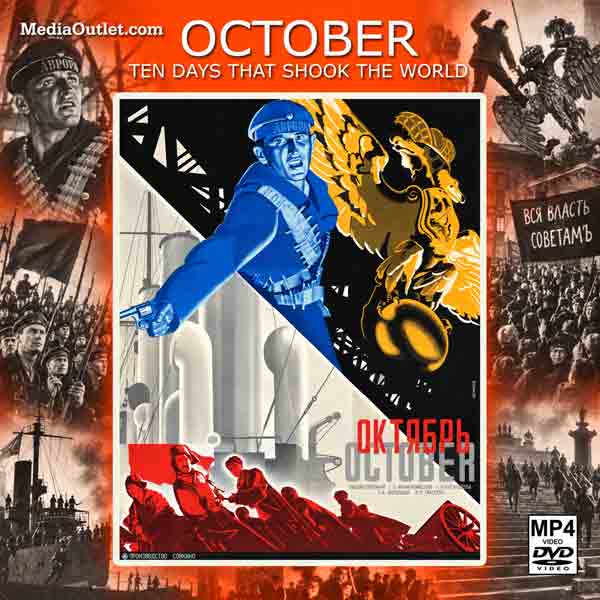
November 7 (Old Style: October 25), 1917:
The Aftermath Of World War I: 20th Century Revolutions: The
Revolutions Of 1917-1923: The Interwar Period (The Aftermath Of
World War I, The Interbellum, Between The Wars): The Russian
Revolution: The Soviet Union (The Union Of Soviet Socialist
Republics, USSR): The History Of The Soviet Union: The Russian
Civil War: Opposition To World War I: The October Revolution (The
Great October Socialist Revolution, The Bolshevik Revolution, Red
October): -- The Bolsheviks overthrow the provisional government
of Alexander Kerensky in Petrograd when they storm the Winter
Palace, the official residence of the Russian monarchs, where the
provisional government temporarily resided. The Council of
People's Commissars was then established as the new government of
Russia, with Nikolai Lenin as chairman, Leon Trotsky as foreign
commissar and Joseph Stalin as commissar of nationalities. This
event was celebrated each year in the former USSR with parades,
massive military displays and public appearances by top Soviet
leaders. The day prior, November 6 (New Style; October 24 Old
Style), 1917, Bolshevik Red Guards under the Military
Revolutionary Committee first began the takeover of buildings
government in Russia, among the first events associated with the
October Revolution. The day before that, November 5 (New Style;
October 23 Old Style), 1917, Lenin called for the October
Revolution, officially known in Soviet literature as the Great
October Socialist Revolution, and commonly referred to as Red
October, the October Uprising, the Bolshevik Revolution,. or
Bolshevik Coup. It was a revolution in Russia led by the
Bolsheviks led by Vladimir Lenin that was instrumental in the
larger Russian Revolution of 1917. It took place with an armed
insurrection in Petrograd on the 25th of October (7 November, New
Style) 1917. The revolution was led by the Bolsheviks, who used
their influence in the Petrograd Soviet to organize the armed
forces. Bolshevik Red Guards forces under the Military
Revolutionary Committee began the occupation of government
buildings on October 25 (Old Style; November 7, 1917 New Style).
The following day, the Winter Palace (the seat of the Provisional
government located in Petrograd, then capital of Russia), was
captured. On Sale Until Midnight Tonight PT!
https://store.earthstation1.com/october-ten-days-that-shook-the-world-19281928.html
Today's
EarthStation1.com 15% (Or More!) Off Commemorative Memorial Title:
Hizzoner The Mayor Jimmy Walker & Fiorello La Guardia MP4
Download DVD
Today, November 7, 2026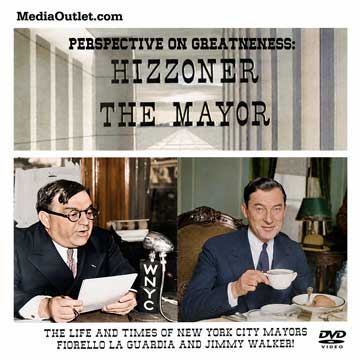
November 7, 1933: Elections: Elections In
The United States: The 1933 New York City Mayoral Election: --
Republican-Fusion candidate Fiorello H. La Guardia is elected the
99th Mayor Of New York City. He defeated the incumbent Democratic
mayor John P. O'Brien and Recovery party candidate Joseph V.
McKee, the latter having become acting Mayor upon the resignation
of elected Mayor Jimmy Walker on September 1, 1932. La Guarida was
reelected in 1937 and again in 1941. Fiorello Henry La Guardia,
born Fiorello Enrico La Guardia, American lawyer and politician,
was Mayor Of New York City for three terms from 1934 to 1945 as a
Republican. La Guardia had been elected to Congress in 1916 and
1918, and again from 1922 through 1930. Irascible, energetic, and
charismatic, he craved publicity and is acclaimed as one of the
greatest mayors in American history. Only five feet, two inches
(1.57 m) tall, he was called "the Little Flower"
(Fiorello is Italian for "little flower"). La Guardia, a
Republican who appealed across party lines, was very popular in
New York during the 1930s. As a New Dealer, he supported President
Franklin D. Roosevelt, a Democrat, and in turn Roosevelt heavily
funded the city and cut off patronage for La Guardia' enemies. La
Guardia revitalized New York City and restored public faith in
City Hall. He unified the transit system, directed the building of
low-cost public housing, public playgrounds, and parks,
constructed airports, reorganized the police force, defeated the
powerful Tammany Hall political machine, and reestablished
employment on merit in place of patronage jobs. La Guardia was a
domineering leader who verged on authoritarian but whose reform
politics were carefully tailored to address the sentiments of his
diverse constituency. He defeated a corrupt Democratic machine,
presided during a depression and a world war, made the city the
model for New Deal welfare and public works programs, and
championed immigrants and ethnic minorities. He succeeded with the
support of a sympathetic president. He secured his place in
history as a tough-minded reform mayor who helped clean out
corruption, brought in gifted experts, and fixed upon the city a
broad sense of responsibility for its own citizens. His
administration engaged new groups that had been kept out of the
political system, gave New York its modern infrastructure, and
raised expectations of new levels of urban possibility. On Sale
Until Midnight Tonight PT!
https://store.earthstation1.com/perspective-on-greatness-hizzoner-the-mayor-laguardia-walker-nyc-dvd.html
Today's
EarthStation1.com 15% (Or More!) Off Commemorative Memorial Title:
To Engineer Is Human: Engineering Disasters DVD, Download, USB
Drive
Today, November 7, 2026
November 7, 1940: Engineering Disasters:
Bridge Disasters: Bridge Disasters In The United States: The
Tacoma Narrows Bridge (The 1940 Tacoma Narrows Bridge, Galloping
Gertie): The Tacoma Narrows Bridge Collapse: -- Galloping Gertie,
the nickname given to The Tacoma Narrows Bridge (1940) by its
construction workers, collapses into Puget Sound in
40-mile-per-hour (64 km/h) winds, as the deck oscillated in an
alternating twisting motion that gradually increased in amplitude
until the deck tore apart that Thursday morning. The 1940 Tacoma
Narrows Bridge, a suspension bridge in the U.S. state of
Washington that spanned the Tacoma Narrows strait of Puget Sound
between Tacoma and the Kitsap Peninsula, was opened on Monday July
1, 1940, just 4 months prior to its dramatic collapse. The
bridge's collapse has been described as "spectacular"
and in subsequent decades "has attracted the attention of
engineers, physicists, and mathematicians". Throughout its
short existence, it was the world's third-longest suspension
bridge by main span, behind the Golden Gate Bridge and the George
Washington Bridge. Construction began in September 1938. From the
time the deck was built, it began to move vertically in windy
conditions, so construction workers nicknamed the bridge Galloping
Gertie. The motion continued after the bridge opened to the
public, despite several damping measures. The portions of the
bridge still standing after the collapse, including the towers and
cables, were dismantled and sold as scrap metal. Efforts to
replace the bridge were delayed by the United States' entry into
World War II, but in 1950, a new Tacoma Narrows Bridge opened in
the same location, using the original bridge's tower pedestals and
cable anchorages. The portion of the bridge that fell into the
water now serves as an artificial reef. The bridge's collapse had
a lasting effect on science and engineering. In many physics
textbooks, the event is presented as an example of elementary
forced mechanical resonance, but it was more complicated in
reality; the bridge collapsed because moderate winds produced
aeroelastic flutter that was self-exciting and unbounded: for any
constant sustained wind speed above about 35 mph (56 km/h), the
amplitude of the (torsional) flutter oscillation would
continuously increase, with a negative damping factor (i.e., a
reinforcing effect, opposite to damping). The collapse boosted
research into bridge aerodynamics-aeroelastics, which has
influenced the designs of all later long-span bridges. On Sale
Until Midnight Tonight PT!
https://store.earthstation1.com/to-engineer-is-human-dvd-great-engineering-disasters.html
Today's
EarthStation1.com 15% (Or More!) Off Commemorative Memorial Title:
Gaudi (1988) Life & Works Of Catalan Architect Antoni Gaudi
MP4 DVD
Today, November 7, 2026
November 7, 2010: Religion: The History
Of Religion: Abrahamic Religions: Christianity: Churches: Church
Dedications: Basilicas: The Basilica I Temple Expiatori De La
Sagrada Familia (The Sagrada Familia):-- Pope Benedict XVI
consecrates The Sagrada Familia and proclaims it a basilica. The
Basilica I Temple Expiatori De La Sagrada Familia, or simply The
Sagrada Familia, is a Catholic Basilica in the Eixample district
of Barcelona, Catalonia, Spain. Designed by the Catalan architect
Antoni Gaudi, it is the tallest church in the world. On March 19,
1882 construction of Sagrada Familia began under the architect
Francisco de Paula del Villar. In 1883, when Villar resigned,
Gaudi took over as chief architect, transforming the project with
his architectural and engineering style, combining Gothic and
curvilinear Art Nouveau forms. Gaudi devoted the remainder of his
life to the project, and he is buried in the church's crypt. At
the time of his death on June 10, 1926 less than a quarter of the
project was complete. Relying solely on private donations, Sagrada
Familia's construction progressed slowly and was interrupted by
the Spanish Civil War. On July 20, 1936 anarchists from the
Iberian Anarchist Federation (Federacion Anarquista Iberica, or
FAI) set fire to the crypt and broke their way into the workshop,
partially destroying Gaudi's original plans. In 1939, Francesc de
Paula Quintana took over site management, which was able to go on
with the material that was saved from Gaudi's workshop and that
was reconstructed from published plans and photographs.
Construction resumed with intermittent progress in the 1950s. On
July 15, 2005 parts of the Sagrada Familia (Nativity facade and
Crypt) were declared a UNESCO World Heritage Site, under "Works
of Antoni Gaudi".Advancements in technologies such as
computer-aided design and computer numerical control (CNC) have
since enabled faster progress, and construction passed the
midpoint in 2010. In 2014, it was anticipated that the building
would be completed by 2026, the centenary of Gaudi's death, but
this schedule was threatened by work slowdowns caused by the
COVID-19 pandemic. On Halloween Eve 2025, also known as Mischief
Night, a new addition to The Sagrada Familia Basilica brought its
height to 534 feet, becoming thereby the tallest church in the
world by breaking a record set by Ulm, Germany's 530-foot-tall Ulm
Minster Gothic church. The central Tower of Jesus Christ reached
structural completion on February 20, 2026, when the final piece
was installed, and it was inaugurated and blessed by Pope Leo XIV
on June 10, 2026 during his visit to Spain, coinciding with the
centenary of Gaudi's death. The tower, with a height of 172.5 m
(566 ft), makes the Sagrada Familia the world's tallest church.
Describing Sagrada Familia, the art critic Rainer Zerbst said "it
is probably impossible to find a church building anything like it
in the entire history of art", and Paul Goldberger describes
it as "the most extraordinary personal interpretation of
Gothic architecture since the Middle Ages". Though sometimes
described as a cathedral, the basilica is not the cathedral church
of the Archdiocese of Barcelona; that title belongs to the
Cathedral of the Holy Cross and Saint Eulalia. On Sale Until
Midnight Tonight PT!
https://store.earthstation1.com/gaudi-1988-life-and-works-of-catalan-architect-antoni-gaudi-mp4-dvd.html
Today's
EarthStation1.com 15% (Or More!) Off Commemorative Memorial Title:
Art Documentaries And Films DVD MP4 Video Download USB Flash Drive
Today, November 7, 2026
November 7, 1942: #BOTD: #HBD! Jean
Shrimpton, English model, actress and beauty, icon of Swinging
London and considered to be one of the world's first supermodels,
is #born Jean Rosemary Shrimpton in High Wycombe, Buckinghamshire,
England. She appeared on numerous magazine covers including Vogue,
Harper's Bazaar, Vanity Fair, Glamour, Elle, Ladies' Home Journal,
Newsweek, and Time. In 2009, Harper's Bazaar named Shrimpton one
of the 26 best models of all time, and in 2012, Time named her one
of the 100 most influential fashion icons of all time. She starred
alongside Paul Jones in the film Privilege (1967). On Sale Until
Midnight Tonight PT!
https://store.earthstation1.com/art-documentaries-and-films-dvd-mp4-video-download-usb-flash-driv4.html
Today's
EarthStation1.com 15% (Or More!) Off Commemorative Memorial Title:
Celebration At Big Sur (1969) DVD, MP4 Video Download, USB Flash
Drive
Today, November 7, 2026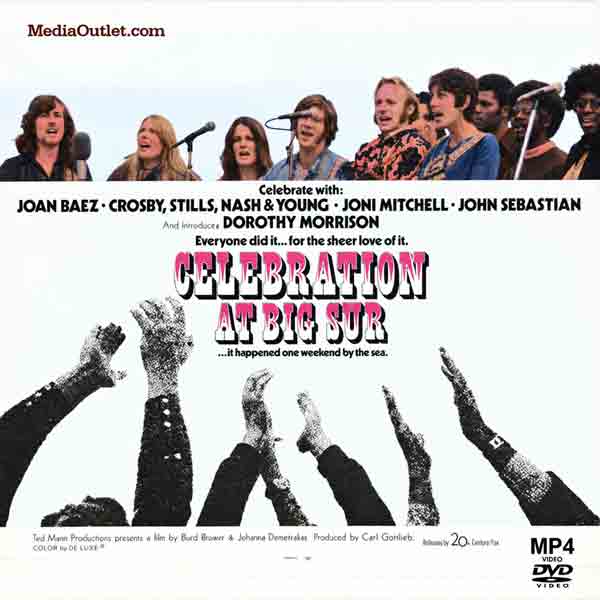
November 7, 1943: #BOTD: #HBD! Joni
Mitchell, Canadian singer, songwriter, guitarist is #born and
painter Roberta Joan Anderson in Fort Macleod, Alberta, Canada.
Drawing from folk, pop, rock, classical, and jazz, Mitchell's
songs often reflect on social and philosophical ideals as well as
her feelings about romance, womanhood, disillusionment and joy.
She has received many accolades, including ten Grammy Awards and
induction into The Rock And Roll Hall Of Fame in 1997. Rolling
Stone called her "one of the greatest songwriters ever",
and AllMusic has stated, "When the dust settles, Joni
Mitchell may stand as the most important and influential female
recording artist of the late 20th century". Mitchell began
singing in small nightclubs in her hometown of Saskatoon,
Saskatchewan, and throughout western Canada, before moving on to
the nightclubs of Toronto, Ontario. She moved to the United States
and began touring in 1965. Some of her original songs ("Urge
for Going", "Chelsea Morning", "Both Sides,
Now", "The Circle Game") were recorded by other
folk singers, allowing her to sign with Reprise Records and record
her debut album, Song to a Seagull, in 1968. Settling in Southern
California, Mitchell helped define an era and a generation with
popular songs like "Big Yellow Taxi" and "Woodstock".
Her 1971 album Blue is often cited as one of the best albums of
all time; it was rated the 30th best album ever made in Rolling
Stone's 2003 list of the "500 Greatest Albums of All Time",
rising to number 3 in the 2020 edition. In 2000, The New York
Times chose Blue as one of the 25 albums that represented "turning
points and pinnacles in 20th-century popular music". NPR
ranked Blue number 1 on a 2017 list of Greatest Albums Made By
Women. Mitchell switched labels and began exploring more
jazz-influenced melodic ideas, by way of lush pop textures, on
1974's Court and Spark, which featured the radio hits "Help
Me" and "Free Man in Paris" and became her
best-selling album. Mitchell's vocal range began to shift from
mezzo-soprano to more of a wide-ranging contralto around 1975. Her
distinctive piano and open-tuned guitar compositions also grew
more harmonically and rhythmically complex as she melded jazz with
rock and roll, R & B, classical music and non-Western beats.
In the late 1970s, she began working with noted jazz musicians
including Jaco Pastorius, Wayne Shorter, Herbie Hancock, and Pat
Metheny as well as Charles Mingus, who asked her to collaborate on
his final recordings. She later turned to pop and electronic music
and engaged in political protest. She was awarded a Lifetime
Achievement Award at the 44th Annual Grammy Awards in 2002 and
became a Kennedy Center Honoree in 2021. Mitchell produced or
co-produced most of her albums. A critic of the music industry,
she quit touring and released her 17th and last album of original
songs in 2007. Mitchell has designed most of her own album covers,
describing herself as a "painter derailed by circumstance".
On Sale Until Midnight Tonight PT!
https://store.earthstation1.com/celebration-at-big-sur-dvd-joan-baez-crosby-stills-nash-joni-mitchell.html
Today's
EarthStation1.com 15% (Or More!) Off Commemorative Memorial Title:
Franklin D. Roosevelt Documentaries DVD, Video Download, USB Drive
Today, November 7, 2026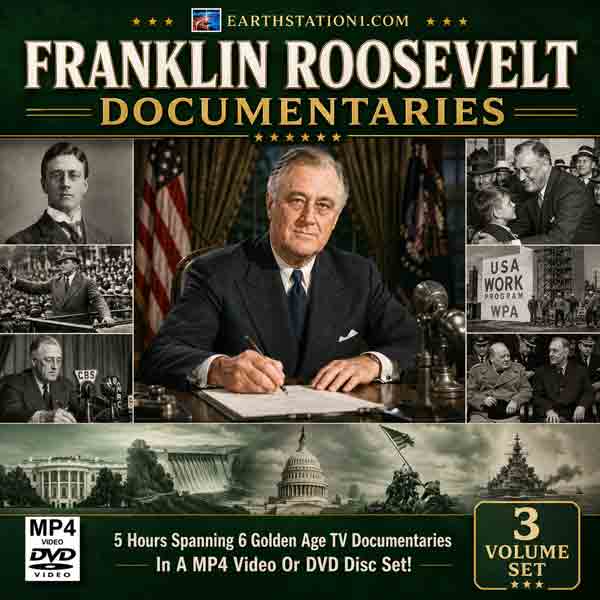
November 7, 1944: Elections: Elections In
The United States: The 1944 United States Presidential Election:
-- Incumbent Democratic President Franklin D. Roosevelt defeats
Republican Thomas E. Dewey to win an unprecedented fourth term.
The 1944 United States Presidential Election was the 40th
quadrennial presidential election. Roosevelt had become the first
president to win a third term with his victory in the 1940
presidential election, with little doubt that he would seek a
fourth term. Unlike in 1940, Roosevelt faced little opposition
within his own party, and he easily won the presidential
nomination of the 1944 Democratic National Convention. Concerned
that Roosevelt's ill health would mean the vice president would
likely become president, the convention dropped Roosevelt's vice
president Henry A. Wallace in favor of Senator Harry S. Truman of
Missouri. Governor Dewey of New York emerged as the front-runner
for the Republican nomination after his victory in the Wisconsin
primary, and he defeated conservative Governor John W. Bricker at
the 1944 Republican National Convention. As World War II was going
well for the United States and its Allies, Roosevelt remained
popular despite his long tenure. Dewey campaigned against the New
Deal and for a smaller government, but was ultimately unsuccessful
in convincing the country to change course. The election was
closer than Roosevelt's other presidential campaigns, but
Roosevelt still won by a comfortable margin in the popular vote
and by a wide margin in the Electoral College. Rumors of
Roosevelt's ill health, although somewhat dispelled by his
vigorous campaigning, proved to be prescient; Roosevelt died less
than three months into his fourth term and was succeeded by
Truman. On Sale Until Midnight Tonight PT!
https://store.earthstation1.com/franklin-roosevelt-documentaries-dual-layer-dvd.html
Today's
EarthStation1.com 15% (Or More!) Off Commemorative Memorial Title:
Millhouse: A White Comedy (1971) Richard Nixon Farce MP4 Download
DVD
Today, November 7, 2026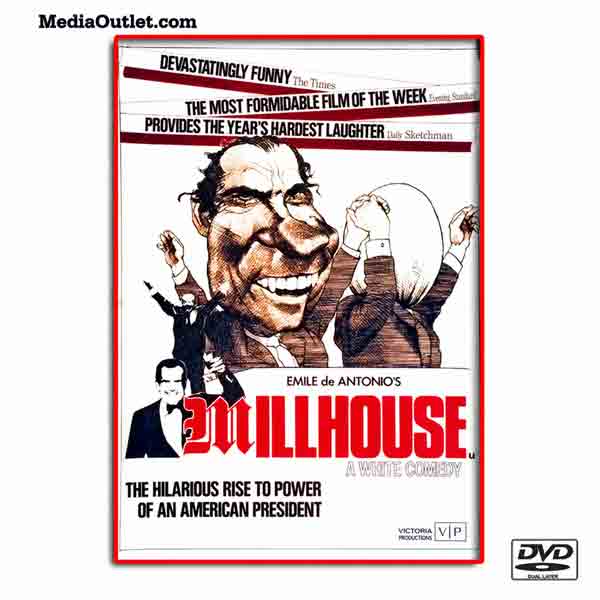
November 7, 1950: Elections: Elections In
The United States: The 1950 United States Senate Elections: The
1950 United States Senate Election In California: -- Republican
Representative and future President Richard Nixon defeats Democrat
Representative Helen Gahagan Douglas following a campaign
characterized by accusations and name-calling, after Democratic
incumbent Sheridan Downey withdrew during the primary election
campaign. Douglas and Nixon each gave up their congressional seats
to run against Downey; no other representatives were willing to
risk the contest. Both Douglas and Nixon announced their
candidacies in late 1949. In March 1950, Downey withdrew from a
vicious primary battle with Douglas by announcing his retirement,
after which Los Angeles Daily News publisher Manchester Boddy
joined the race. Boddy attacked Douglas as a leftist and was the
first to compare her to New York Representative Vito Marcantonio,
who was accused of being a communist. Boddy, Nixon, and Douglas
each entered both party primaries, a practice known as
cross-filing. In the Republican primary, Nixon was challenged only
by cross-filers and fringe candidates. Nixon won the Republican
primary and Douglas the Democratic contest, with each also
finishing third in the other party's contest (Boddy finished
second in both races). The contentious Democratic race left the
party divided, and Democrats were slow to rally to Douglas-some
even endorsed Nixon. The Korean War broke out only days after the
primaries, and both Nixon and Douglas contended that the other had
often voted with Marcantonio to the detriment of national
security. Nixon's attacks were far more effective, and he won the
November 7 general election by almost 20 percentage points,
carrying 53 of California's 58 counties and all metropolitan
areas. Though Nixon was later criticized for his tactics in the
campaign, he defended his actions, and also stated that Douglas's
positions were too far to the left for California voters. Other
reasons for the result have been suggested, ranging from tepid
support for Douglas from President Truman and his administration
to the reluctance of voters in 1950 to elect a woman. The campaign
gave rise to two political nicknames, both coined by Boddy or
making their first appearance in his newspaper: "The Pink
Lady" for Douglas and "Tricky Dick" for Nixon. On
Sale Until Midnight Tonight PT!
https://store.earthstation1.com/millhouse-a-white-comedy-dvd-1971-richard-nixon-documen1971.html
Today's
EarthStation1.com 15% (Or More!) Off Commemorative Memorial Title:
America: The Second Century Documentary Series DVD, Download, USB
Today, November 7, 2026
November 7, 1955: Civil Rights Movements:
The American Civil Rights Movement (1954-1968): Anti-Black Racism
In The United States: Public Accommodations Discrimination In The
United States: Desegregation In The United States: Mayor and City
Council of Baltimore City v. Dawson, 350 U.S. 877 (1955): -- The
Supreme Court Of The United States (SCOTUS) bans segregation in
public recreational facilities when it issues a per curiam
decision (per curiam opinion) (a ruling issued by an appellate
court of multiple judges in which the decision rendered is made by
the court (or at least, a majority of the court) acting
collectively (and typically, though not necessarily, unanimously),
affirming an order by the United States Court Of Appeals For The
Fourth Circuit that likewise banned racial segregation in public
beaches and bathhouses. In contrast to regular opinions, a per
curiam does not list the individual judge responsible for
authoring the decision, but minority concurring and dissenting
opinions are signed. The case Mayor and City Council of Baltimore
City v. Dawson arose from a challenge to segregation at Sandy
Point State Park, a public recreation area on Chesapeake Bay,
located at the western end of the Chesapeake Bay Bridge in Anne
Arundel County, Maryland. The state park is known for the
popularity of its swimming beach, with annual attendance exceeding
one million visitors. The park opened in 1952 with racially
segregated beaches and bathhouses which led to to the litigation
in 1955. The U.S. Supreme Court, in its order to the park to
become integrated, ultimately extended the Fourteenth Amendment to
cover state beaches and other recreational facilities. On Sale
Until Midnight Tonight PT!
https://store.earthstation1.com/america-the-second-century-us-2nd-100-years-history-621006.html
Today's
EarthStation1.com 15% (Or More!) Off Commemorative Memorial Title:
United Nations Documentaries Set: 2 MP4 Downloads Or 2 DVDs
Today, November 7, 2026
November 7, 1956: The Aftermath Of World
War II: The Cold War: The Cold War (1947-1953): The Decolonization
Of Asia: The Arab-Israeli Conflict: The Suez Crisis (The Second
Arab-Israeli War, The Tripartite Aggression, The Sinai War): --
The United Nations General Assembly adopts a resolution calling
for the United Kingdom, France and Israel to immediately withdraw
their troops from Egypt. All three countries promptly comply. On
October 29, Israel invaded the Egyptian Sinai. Britain and France
issued a joint ultimatum to cease fire, which was ignored. On
November 5, Britain and France landed paratroopers along the Suez
Canal. The Egyptian forces were defeated, but they did block the
canal to all shipping. It later became clear that the Israeli
invasion and the subsequent Anglo-French attack had been planned
beforehand by the three countries. On Sale Until Midnight Tonight
PT!
https://store.earthstation1.com/united-nations-documentaries-set-dvd-mp4-download-usb-driv4.html
Today's
EarthStation1.com 15% (Or More!) Off Commemorative Memorial Title:
Richard Nixon MP3s Collection CD, MP3 Audio Download, USB Flash
Drive
Today, November 7, 2026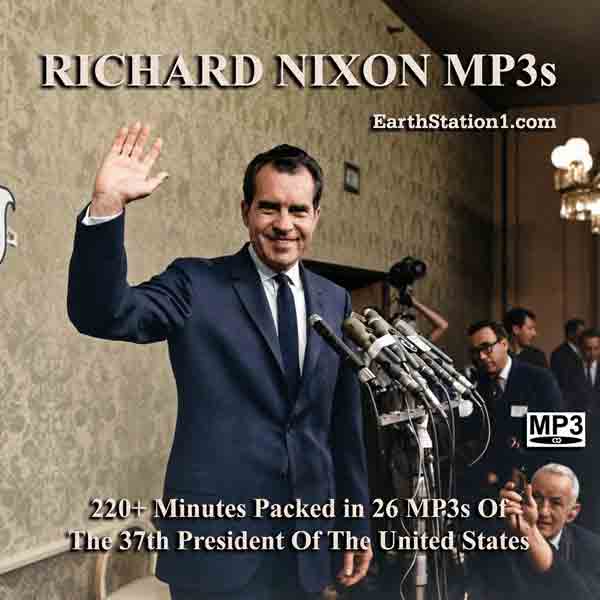
November 7, 1962: Elections: Elections In
The United States: The 1962 California Gubernatorial Election: --
Richard Nixon's November 1962 Press Conference (Richard Nixon's
"Last Press Conference"): -- The 1962 California
gubernatorial election was held on November 6, 1962. The
Democratic incumbent, Pat Brown, won re-election as the 32nd
Governor of California against former Vice President and 1960
Republican presidential nominee Richard Nixon. In his concession
speech, Nixon accused the media of favoring his opponent Brown,
stating that it was his "last press conference" and "You
won't have Nixon to kick around any more." Richard Nixon told
news reporters in Los Angeles "...just think how much you're
going to be missing. You won't have Nixon to kick around any more,
because, gentlemen, this is my last press conference." Nixon'
statement came the day after he lost the election for California
governor to incumbent Edmund G. Brown. Six years later, Nixon
re-entered politics, and won the 1968 United States Presidential
Election, defeating the democratic candidate Hubert H. Humphrey.
Re-elected the 37th president of the United States in 1972 on the
10th anniversay of his loss in the 1962 California Gubernatorial
Election, he resigned in 1974 during impeachment proceedings
resulting from the Watergate scandal. On Sale Until Midnight
Tonight PT!
https://store.earthstation1.com/richard-nixon-mp3s-collection-as-mp3-cd-download-usb-dri33.html
Today's
EarthStation1.com 15% (Or More!) Off Commemorative Memorial Title:
Black Civil Rights Films: African-American History DVD, MP4, USB
Stick
Today, November 7, 2026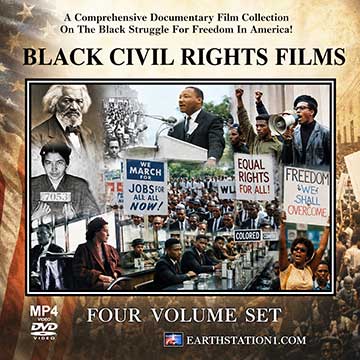
November 7, 1967: Elections: Elections In
The United States: The 1967 Cleveland Mayoral Election: --
Democratic candidate Carl Stokes is elected Mayor of Cleveland,
Ohio, and becomes, alongside the simultanous election of Richard
G. Hatcher in the 1967 Gary, Indiana Mayoral Election, the first
African American mayor of a major American city (Cleveland was, at
the time, the ninth largest city in the United States; together,
these were the first elections of African Americans as mayors of
cities over 100,000). Stokes had unseated incumbent mayor Ralph S.
Locher in the Democratic Party primary to become the Democratic
mayoral candidate. He defeated the Republican candidate Seth Taft,
a grandson of President William Howard Taft. Stoke's election came
in a city which was, at the time, 68% white. On Sale Until
Midnight Tonight PT!
https://store.earthstation1.com/black-civil-rights-films-africanamerican-history-dvd.html
Today's
EarthStation1.com 15% (Or More!) Off Commemorative Memorial Title:
Eyes On The Prize II: America At The Racial Crossroads DVD MP4 USB
Today, November 7, 2026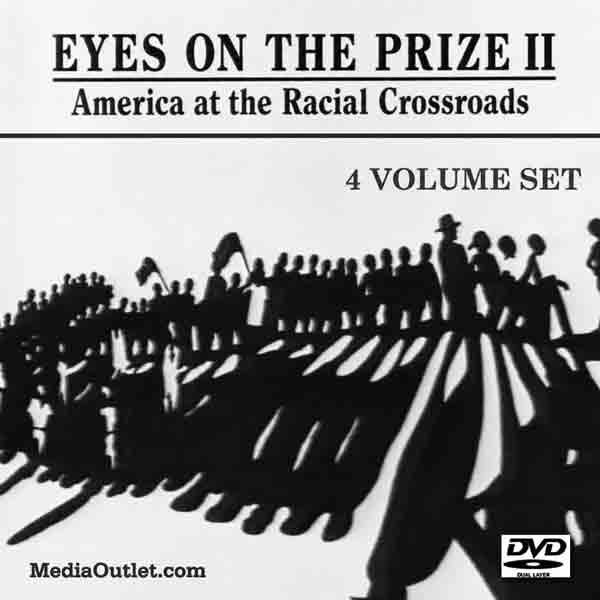
November 7, 1967: Elections: Elections In
The United States: The 1967 Gary, Indiana Mayoral Election:
Democratic candidate Richard G. Hatcher is elected Mayor of Gary,
Indiana, and becomes, alongside the simultanous election of Carl
Stokes in the 1967 Cleveland Mayoral Election, the first African
American mayor of a major American city (these were the first
elections of African Americans as mayors of cities over 100,000)
and the first African American mayor in the state of Indiana.
Hatcher had unseated incumbent mayor A. Martin Katz in the
Democratic Party primary to become the Democratic mayoral
candidate. He defeated the Republican candidate Joseph B. Radigan.
While Black Americans made up 53% of Gary's population, white
residents had an edge in voter registration. Hatcher was able to
overcome this and win the election by over 2,000 votes by winning
96% of the black vote in addition to 12% of the white vote. On
Sale Until Midnight Tonight PT!
https://store.earthstation1.com/eyes-on-the-prize-ii-dvd-set-4-discs-complete-2nd-seri42.html
Today's
EarthStation1.com 15% (Or More!) Off Commemorative Memorial Title:
Watergate: The Secret Story With Mike Wallace DVD MP4 USB Flash
Drive
Today, November 7, 2026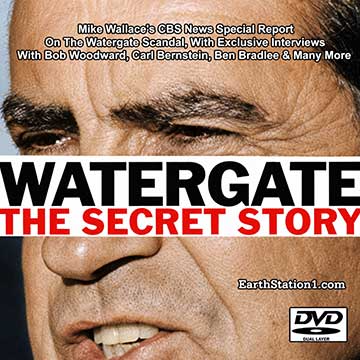
November 7, 1972: Elections: Elections In
The United States: The 1972 United States Elections: -- Barbara
Jordan is elected to the U.S. House of Representatives as a member
of the 93rd United States Congress representing Texas's 18th
Congressional District (which includes much of inner city of
Houston and the surrounding area and all of the Downtown Houston
district since 1972), becoming the first African American woman to
represent a previously Confederate state in Congress, a district
that has elected a black representative in every election since.
The election took place during the later stages of the Vietnam
War. The Republican Party won a landslide victory in the
presidential election, and picked up seats in the House, but the
Democratic Party easily retained control of Congress. This was the
first election after the ratification of the 26th Amendment, which
granted the right to vote to those aged 18-20. Barbara Charline
Jordan (February 21, 1936 - January 17, 1996) was an American
lawyer, educator, and politician. A Democrat, she was, in addition
to the first Southern African American woman elected to the United
States House Of Representatives, was also the first African
American elected to the Texas Senate after Reconstruction. Jordan
was known for her eloquent opening statement at the House
Judiciary Committee hearings during the impeachment process
against Richard Nixon. In 1976, she became the first African
American, and the first woman, to ever deliver a keynote address
at a Democratic National Convention. She received the Presidential
Medal Of Freedom, among numerous other honors. She was the first
African American woman to be buried in the Texas State Cemetery.
Jordan is also known for her work as chair of the U.S. Commission
on Immigration Reform. On Sale Until Midnight Tonight PT!
https://store.earthstation1.com/watergate-the-secret-story-with-mike-wallace-dvd-mp4-usb-flash-driv4.html
Today's
EarthStation1.com 15% (Or More!) Off Commemorative Memorial Title:
Television: A History Of Broadcast TV DVD MP4 Download USB Drive
Today, November 7, 2026
November 7, 1967: The History Of
Broadcasting: The History Of Public Broadcasting: The History Of
Television Broadcasting: The History Of Public Television
Broadcasting: The Public Broadcasting Act of 1967 (47 U.S.C.
Subsection 396): -- US President Lyndon B. Johnson signs the
Public Broadcasting Act of 1967, establishing the Corporation for
Public Broadcasting (CPB) and, eventually, the Public Broadcasting
Service (PBS), and National Public Radio (NPR). The act created
the CPB as an American non-profit corporation funded by the
federal government to promote and help support public
broadcasting, and charged with encouraging and facilitating
program diversity, and expanding and developing non-commercial
broadcasting. The CPB would have the funds to help local stations
create innovative programs, thereby increasing the service of
broadcasting in the public interest throughout the country. The
corporation's mission is to ensure universal access to
non-commercial, high-quality content and telecommunications
services. It does so by distributing more than 70 percent of its
funding to more than 1,400 locally owned public radio and
television stations. On Sale Until Midnight Tonight PT!
https://store.earthstation1.com/television-1988-tv-documentary-series-8-shows-4-dual-laye198884.html
Today's
EarthStation1.com 15% (Or More!) Off Commemorative Memorial Title:
Unauthorized Biography: Richard Nixon w/Barbara Howar MP4 Download
DVD
Today, November 7, 2026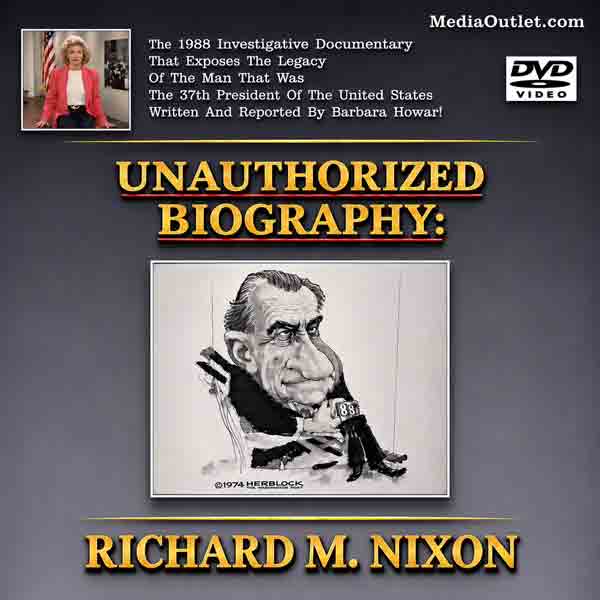
November 7, 1973: The Aftermath Of World
War II: The Cold War: The Cold War In Asia: The Indochina Wars:
The Vietnam War (The Second Indochina War, The Vietnam Conflict,
The Resistance War Against America): The United States In The
Vietnam War: Opposition To United States Involvement In The
Vietnam War: The War Powers Resolution (The War Powers Resolution
Of 1973, The War Powers Act): -- The United States Congress
overrides President Richard M. Nixon's veto of the War Powers
Resolution, which limits presidential power to wage war without
congressional approval. The immediate reason the resolution came
about was because news leaked out that President Nixon conducted
secret bombings of Cambodia (Operation Menu: March 18, 1969 - May
26, 1970, as part of both the Vietnam War and the Cambodian Civil
War) without notifying Congress. During the Vietnam War, the
United States found itself involved for many years in situations
of intense conflict without a declaration of war. Many members of
Congress became concerned with the erosion of congressional
authority to decide when the United States should become involved
in a war or the use of armed forces that might lead to war. The
War Powers Resolution is a federal law intended to check the U.S.
president's power to commit the United States to an armed conflict
without the consent of the U.S. Congress. The resolution was
adopted in the form of a United States congressional joint
resolution. It provides that the president can send the U.S. Armed
Forces into action abroad only by declaration of war by Congress,
"statutory authorization", or in case of "a
national emergency created by attack upon the United States, its
territories or possessions, or its armed forces". The War
Powers Resolution requires the president to notify Congress within
48 hours of committing armed forces to military action and forbids
armed forces from remaining for more than 60 days, with a further
30-day withdrawal period, without congressional authorization for
use of military force (AUMF) or a declaration of war by the United
States. The resolution was passed by two-thirds each of the House
and Senate, overriding the veto of President Richard Nixon. It has
been alleged that the War Powers Resolution has been violated in
the past - for example, by President Bill Clinton in 1999, during
NATO bombing of Yugoslavia. Congress has disapproved all such
incidents, but none has resulted in any successful legal actions
being taken against the president for alleged violations. On Sale
Until Midnight Tonight PT!
https://store.earthstation1.com/unauthorized-biography-richard-nixon-dvd-documentary.html
Today's
EarthStation1.com 15% (Or More!) Off Commemorative Memorial Title:
Black Civil Rights Films: African-American History DVD, MP4, USB
Stick
Today, November 7, 2026
November 7, 1989: Elections: Elections In
The United States: The 1989 Virginia Gubernatorial Election: --
Democratic candidate Douglas Wilder is elected Governor of
Virginia, becoming the first African American governor of
Virginia, and the first African American governor of any state
since Reconstruction more than one hundred years earlier.
Incumbent Democratic Governor Jerry Baliles was unable to seek a
second term due to term limits. Democratic nominee and Lieutenant
Governor L. Douglas Wilder went against former Attorney General of
Virginia J. Marshall Coleman in one of the closest elections in
Virginia history, with Wilder receiving 50.13% of the vote, and
Coleman receiving 49.76%, a 0.34% difference. On Sale Until
Midnight Tonight PT!
https://store.earthstation1.com/black-civil-rights-films-africanamerican-history-dvd.html
Today's
EarthStation1.com 15% (Or More!) Off Commemorative Memorial Title:
Hell On Earth: The Kuwaiti Oil Fires Documentary Set MP4 Download
DVD
Today, November 7, 2026
November 7, 1991: The Aftermath Of World
War II: The Cold War: The Cold War (1985-1991) (The End Of The
Cold War): The Gulf War (The Persian Gulf War, Gulf War I):
Operation Desert Storm: The Kuwaiti Oil Fires: --The final Kuwaiti
oil fire is extinguished. The number of oil fires peak between
February 22 and 24, when the allied ground offensive began. As
part of a scorched earth policy while retreating from Kuwait in
1991 due to advancing Coalition military forces, about 605 to 732
oil wells were set on fire, along with an unspecified number of
oil filled low-lying areas, such as oil lakes and fire trenches,
between January and February 1991. The first oil well fires were
extinguished in early April 1991, with the last well capped on
November 6, 1991. The Gulf War (August 2, 1990 - February 28,
1991), codenamed Operation Desert Shield (August 2, 1990 - January
17, 1991) for operations leading to the buildup of troops and
defense of Saudi Arabia, and Operation Desert Storm (January 17,
1991 - February 28, 1991) in its combat phase, was a war waged by
coalition forces from 35 nations led by the United States against
Iraq in response to Iraq's invasion and annexation of Kuwait. The
war is also known under other names, such as the Persian Gulf War,
First Gulf War, Gulf War I, Kuwait War, First Iraq War or Iraq
War, before the term "Iraq War" became identified
instead with the 2003 Iraq War. On Sale Until Midnight Tonight PT!
https://store.earthstation1.com/hell-on-earth-the-kuwaiti-oil-fires-dvd-mp4-download-usb-flash-driv4.html
Today's
EarthStation1.com 15% (Or More!) Off Commemorative Memorial Title:
Presidential Campaign TV Ads 1952-1992 MP4 Video Download 4 DVD
Set
Today, November 7, 2026
November 7, 2020: Elections: Elections In
The United States: The 2020 United States Presidential Election:
-- Due to the large number of mail-in ballots, some swing states
saw delays in vote counting and reporting, which led to major news
outlets delaying their projection of Joe Biden and Kamala Harris
as the president-elect and vice president-elect; as soon as the
Pennsylvania vote count was completed at 11:38 AM on morning of
November 7, the election was called for the Biden/Harris ticket,
three and a half days after the election was held; major media
networks project a state for a candidate once there is high
statistical confidence that the outstanding vote would be unlikely
to prevent the projected winner from ultimately winning that
state. Accordingly, the 59th quadrennial presidential election
results in the Democratic ticket of former vice president Joe
Biden and the junior U.S. senator from California Kamala Harris
defeating the incumbent Republican president, Donald Trump, and
vice president, Mike Pence. The election took place against the
backdrop of the global COVID-19 pandemic and related recession.
The election saw the highest voter turnout by percentage since
1900, with each of the two main tickets receiving more than 74
million votes, surpassing Barack Obama's record of 69.5 million
votes from 2008. Biden received more than 81 million votes, the
most votes ever cast for a candidate in a U.S. presidential
election. In a competitive primary that featured the most
candidates for any political party in the modern era of American
politics, Biden secured the Democratic presidential nomination
over his closest rival, Senator Bernie Sanders. Biden's running
mate, Harris, became the first African-American, first
Asian-American, and third female vice presidential nominee on a
major party ticket. Trump secured re-nomination, getting a total
of 2,549 delegates, one of the most in presidential primary
history, to runner-up Bill Weld's one delegate in the Republican
primaries. Jo Jorgensen secured the Libertarian presidential
nomination with Spike Cohen as her running mate, and Howie Hawkins
secured the Green presidential nomination with Angela Nicole
Walker as his running mate. The central issues of the election
included the public health and economic impacts of the ongoing
COVID-19 pandemic; civil unrest in reaction to the police murder
of George Floyd and others; the Supreme Court following the death
of Ruth Bader Ginsburg and confirmation of Amy Coney Barrett; and
the future of the Affordable Care Act. Due to the ongoing
pandemic, a record number of ballots were cast early and by mail.
Many more registered Democrats voted by mail than registered
Republicans. Biden ultimately received the majority in the
Electoral College with 306 electoral votes, while Trump received
232. Key to Biden's victory were his wins in the
Democratic-leaning Rust Belt states of Michigan, Pennsylvania, and
Wisconsin, which Trump carried in 2016 and whose combined 46
electoral votes were enough to swing the election to either
candidate. Biden also became the first Democrat to win a
presidential election in Georgia since 1992, in Arizona since
1996, and in Nebraska's 2nd congressional district since 2008.
Before, during, and after Election Day, Trump and numerous other
Republicans engaged in an aggressive and unprecedented attempt to
subvert the election and overturn the results, falsely alleging
widespread voter fraud and trying to influence the vote-counting
process in swing states, in what was described by many as an
attempted coup d'etat. Attorney General William Barr and officials
in each of the 50 states found no evidence of widespread fraud or
irregularities in the election. Federal agencies overseeing
election security said it was the most secure in American history.
The Trump campaign and its allies, including Republican members of
Congress, continued to engage in numerous attempts to overturn the
results of the election by filing numerous lawsuits in several
states (most of which were withdrawn or dismissed), spreading
conspiracy theories alleging fraud, pressuring Republican state
election officials (including, notably, Georgia Secretary of State
Brad Raffensperger, in a phone call that later became widely
publicized) and legislators to change results, pressuring the
Department Of Justice to declare the election "corrupt"
and intervene, objecting to the Electoral College certification in
Congress, and refusing to cooperate with the presidential
transition of Joe Biden. With Trump vowing that he would never
concede the election and after exhorting his followers to "fight
like hell", a mob of Trump supporters attacked the United
States Capitol on January 6, 2021, during the joint session of
Congress held to certify the Electoral College count. On January
7, Trump acknowledged the incoming administration without
mentioning Biden's name. Biden and Harris were inaugurated on
January 20, 2021. Trump was indicted on August 1, 2023, on four
counts relating to conspiring to overturn the results. On Sale
Until Midnight Tonight PT!
https://store.earthstation1.com/presidential-campaign-tv-ads-19521984-dvds-2-dual-la195219842.html
Today's
EarthStation1.com 15% (Or More!) Off Commemorative Memorial Title:
Mr. President US Presidential History Radio w/Edward Arnold CD MP3
USB
Today, November 7, 2026
November 7, 1848: Elections: Elections In
The United States: The 1848 United States Presidential Election:
-- General Zachary Taylor of the Whig Party, national hero of The
Mexican-American War, defeats Senator Lewis Cass of the Democratic
Party in the first election held in the aftermath of the
Mexican-American War. The 1848 United States Presidential Election
was the 16th quadrennial presidential election. Despite Taylor's
unclear political affiliations and beliefs, and the Whig
opposition to the Mexican-American War, the 1848 Whig National
Convention nominated the popular Mexican-American War general over
party stalwarts such as Henry Clay and Daniel Webster. For vice
president, the Whigs nominated Millard Fillmore, a New York Whig
known for his moderate views on slavery. Incumbent President James
K. Polk, a Democrat, honored his promise not to seek re-election,
leaving his party's nomination open. The 1848 Democratic National
Convention nominated Senator Lewis Cass of Michigan after former
President Martin Van Buren withdrew his bid for a second term over
a platform dispute. Van Buren broke from his party to lead the
ticket of the Free Soil Party, which opposed the extension of
slavery into the territories. The Whig choice of Zachary Taylor
was made almost out of desperation; he was not clearly committed
to Whig principles, but he was popular for leading the war effort.
The Democrats had a record of prosperity and had acquired the
Mexican cession and parts of Oregon country. It appeared almost
certain that they would win unless the Whigs picked Taylor. Taylor
won a plurality of the popular vote and a majority of the
electoral vote, while Van Buren won 10.1% of the popular vote, a
strong showing for a third party candidate. Taylor's victory made
him the second of two Whigs to win a presidential election,
following William Henry Harrison's victory in the 1840
presidential election. Like Harrison, Taylor died during his term,
and he was succeeded by Fillmore. On Sale Until Midnight Tonight
PT!
https://store.earthstation1.com/mister-president-historical-old-time-radio-mp3-c3.html
Today's
EarthStation1.com 15% (Or More!) Off Commemorative Memorial Title:
Portraits Of American Presidents Nos. 1-42 TV Series MP4 Download
DVD
Today, November 7, 2026
November 7, 1876: Elections: Elections In
The United States: The 1876 United States Presidential Election:
-- Republican nominee Rutherford B. Hayes defeats Democrat Samuel
J. Tilden. The 1876 United States Presidential Election was the
23rd quadrennial presidential election. It was one of the most
contentious presidential elections in American history. Its
resolution involved negotiations between the Republicans and
Democrats, resulting in the Compromise of 1877, and on March 2,
1877 the counting of electoral votes by the House and Senate
occurred, confirming Hayes as President. It was the second of five
U.S. presidential elections in which the winner did not win a
plurality of the national popular vote. After U.S. President
Ulysses S. Grant declined to seek a third term despite previously
being expected to do so, U.S. Representative James G. Blaine
emerged as the frontrunner for the Republican nomination. However,
Blaine was unable to win a majority at the 1876 Republican
National Convention, which settled on Governor Hayes of Ohio as a
compromise candidate. The 1876 Democratic National Convention
nominated Governor Tilden of New York on the second ballot. The
results of the election remain among the most disputed ever.
Although it is not disputed that Tilden outpolled Hayes in the
popular vote, there were wide allegations of electoral fraud,
election violence, and other disfranchisement of
predominately-Republican Black voters. After a first count of
votes, Tilden had won 184 electoral votes to Hayes's 165, with 20
votes from four states unresolved. In Florida, Louisiana, and
South Carolina, both parties reported their candidate to have won
the state. In Oregon, one elector was replaced after being
declared illegal for having been an "elected or appointed
official." The question of who should have been awarded those
electoral votes is the source of the continued controversy. An
informal, "back-room" deal was struck to resolve the
votes: the Compromise of 1877. In the deal, the Democrats conceded
the 20 contested electoral votes to Hayes, resulting in a 185-184
victory; in return, the Republicans agreed to withdraw federal
troops from the South, marking the end of Reconstruction. To date,
it remains the election that yielded the highest voter turnout of
the eligible voting-age population in American history, at 81.8%.
Tilden's 50.9% is the largest share of the popular vote received
by a candidate that was not elected to the presidency. As of 2022,
this remains the only presidential election in American history
where both major party nominees were sitting governors. Despite
not becoming president, Tilden was the first Democratic
presidential nominee since James Buchanan in 1856 to win the
popular vote and the first since Franklin Pierce in 1852 to do so
with an outright majority; in fact, Tilden received a slightly
higher percentage than Pierce in 1852 although Pierce had won in a
landslide against the Whig Winfield Scott. On Sale Until Midnight
Tonight PT!
https://store.earthstation1.com/portraits-of-american-presidents-nos-142-tv-series-mp4-download1424.html
Today's
EarthStation1.com 15% (Or More!) Off Commemorative Memorial Title:
David Frye: I Am Richard Nixon All 4 Comedy Albums MP3 CD Download
USB
Today, November 7, 2026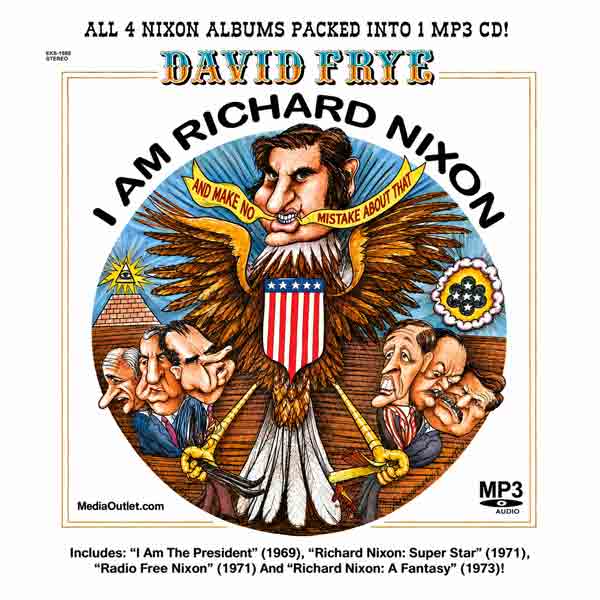
November 7, 1972: Elections: Elections In
The United States: The 1972 United States Presidential Election:
-- On the 10th anniversary of his losing the election for
California governor, Richard Nixon is reelected the 37th President
of the United States. The 1972 United States presidential election
was the 47th quadrennial presidential election. Incumbent
Republican President Richard Nixon from California defeated
Democratic U.S. Senator George McGovern of South Dakota. Until the
1984 election, this was the largest margin of victory in the
Electoral College for a Republican in a U.S. presidential
election. Nixon easily swept aside challenges from two Republican
congressmen in the 1972 Republican primaries to win re-nomination.
McGovern, who had played a significant role in changing the
Democratic nomination system after the 1968 election, mobilized
the anti-war movement and other liberal supporters to win his
party's nomination. Among the candidates he defeated were early
front-runner Edmund Muskie, 1968 nominee Hubert Humphrey, and
Congresswoman Shirley Chisholm, the first African American to run
for a major party's presidential nomination. Nixon emphasized the
strong economy and his success in foreign affairs, while McGovern
ran on a platform calling for an immediate end to the Vietnam War,
and the institution of a guaranteed minimum income. Nixon
maintained a large and consistent lead in polling. Separately,
Nixon's reelection committee broke into the Watergate complex to
wiretap the Democratic National Committee's headquarters, a
scandal that would later be known as "Watergate".
McGovern's campaign was further damaged by the revelation that his
running mate, Thomas Eagleton, had undergone electroconvulsive
therapy as a treatment for depression. Eagleton was replaced on
the ballot by Sargent Shriver. Nixon won the election in a
landslide, taking 60.7% of the popular vote and carrying 49 states
while being the first Republican to sweep the South. McGovern took
just 37.5% of the popular vote, while John G. Schmitz of the
American Independent Party won 1.4% of the vote. Nixon received
almost 18 million more votes than McGovern, and he holds the
record for the widest popular vote margin in any post-World War II
United States presidential election. The 1972 presidential
election was the first since the ratification of the 26th
Amendment, which lowered the voting age from 21 to 18. Within two
years of the election, both Nixon and Vice President Spiro Agnew
resigned from office: the former in August 1974, due to Watergate,
the latter in October 1973, due to a separate corruption charge.
Gerald Ford succeeded Agnew as vice president, then in the
following year succeeded Nixon as president, making him the only
U.S. president in history to not be elected to the office on a
presidential ticket. As of 2020, this was the last time that
Minnesota voted for the Republican candidate in a presidential
election, and only once since then have Rhode Island and Hawaii
done so, when they voted for Ronald Reagan in the 1984 election.
On Sale Until Midnight Tonight PT!
https://store.earthstation1.com/david-frye-i-am-richard-nixon-all-4-nixon-comedy-albums-mp3-43.html
Today's
EarthStation1.com 15% (Or More!) Off Commemorative Memorial Title:
New York City History Documentary Collection MP4 Video Download
DVD
Today, November 7, 2026
November 7, 1989: Elections: Elections In
The United States: The 1989 New York City Mayoral Election: -- The
Democratic candidate, Manhattan Borough President David Dinkins,
becomes the first African American to be elected Mayor of New York
City. Dinkins had defeated incumbent mayor Ed Koch in the
Democratic primary to become the Democratic mayoral candidate. He
narrowly defeated the Republican candidate, U.S. Attorney for the
Southern District of New York, Rudy Giuliani. They also faced
several third party candidates. Dinkins won with 50.42% of the
vote to Giuliani's 47.84%. Whereas the two preceding mayoral
elections of the 1980s had been Democratic landslide victories,
with all five boroughs voting to re-elect incumbent Ed Koch, the
1989 election was a closely contested race that finished with a
narrow 2.58% margin of victory for David Dinkins. Dinkins won
majorities in the Bronx, Manhattan, and Brooklyn, while Giuliani
carried Queens and Staten Island, the latter by a landslide
margin. Four years later, in the 1993 election, Dinkins and
Giuliani would face each other again in a re-match and Dinkins
would narrowly lose to Giuliani in his bid for re-election. On
Sale Until Midnight Tonight PT!
https://store.earthstation1.com/new-york-city-history-videos-3-dvd-se3.html
Today's
EarthStation1.com 15% (Or More!) Off Commemorative Memorial Title:
The Russian Revolution DVD, MP4 Video Download, USB Flash Drive
Today, November 7, 2026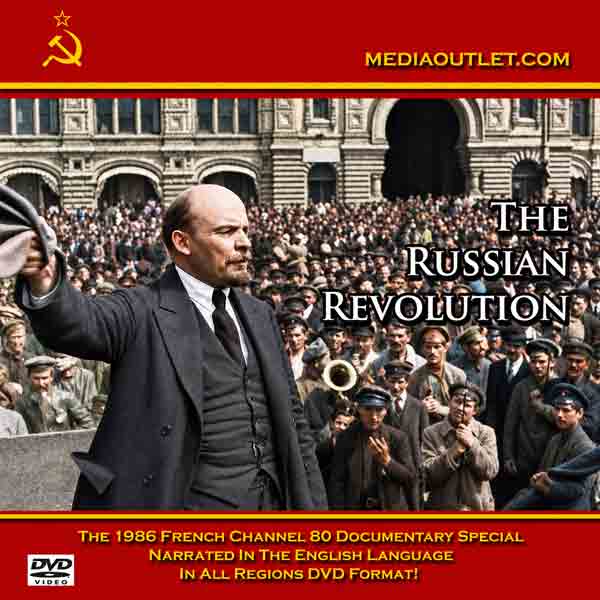
November 7, 1879: #BOTD: Leon Trotsky,
Russian revolutionary, Marxist theorist, and Soviet politician
whose particular strain of Marxist thought is known as Trotskyism
(d. August 21, 1940) is #born Lev Davidovich Bronstein into a
Jewish family in Yanovka, Yelisavetgradsky Uyezd, Russian Empire.
Initially supported the Menshevik Internationalists faction within
the Russian Social Democratic Labour Party, Trotsky then joined
the Bolsheviks ("majority") just before the 1917 October
Revolution, immediately becoming a leader within the Communist
Party. He would go on to become one of the seven members of the
first Politburo, founded in 1917 to manage the Bolshevik
Revolution. During the early days of the Russian Soviet Federative
Socialist Republic (RSFSR) and the Soviet Union, he served first
as People's Commissar for Foreign Affairs and later as the founder
and commander of the Red Army, with the title of People's
Commissar of Military and Naval Affairs. He became a major figure
in the Bolshevik victory in the Russian Civil War (1918-1922).
After leading a failed struggle of the Left Opposition against the
policies and rise of Joseph Stalin in the 1920s and against the
increasing role of bureaucracy in the Soviet Union, Trotsky was
removed as Commissar for Military and Naval Affairs (January
1925), removed from the Politburo (October 1926), removed from the
Central Committee (October 1927), expelled from the Communist
Party (November 1927), exiled to Alma-Ata (January 1928), and
exiled from the Soviet Union (February 1929). As the head of the
Fourth International, Trotsky continued to oppose the Stalinist
bureaucracy in the Soviet Union while in exile. Trotsky's ideas
formed the basis of Trotskyism, a major school of Marxist thought
that opposes the theories of Stalinism. He was written out of the
history books under Stalin, and was one of the few Soviet
political figures who was not rehabilitated by the government
under Nikita Khrushchev in the 1950s. On August 21, 1940, Trotsky
died in exile in Mexico City from wounds received by an
assassination ice axe attack by Ramon Mercader, a Spanish-born
NKVD agent. Mercader acted upon instruction from Stalin and was
nearly beaten to death by Trotsky's bodyguards the day prior.
Mercader spent the next 20 years in a Mexican prison for the
murder. Stalin presented Mercader with an Order of Lenin in
absentia. After an ineffectual attempt to have Trotsky murdered in
March 1939, Stalin assigned the overall organization of
implementing the task to the NKVD officer Pavel Sudoplatov, who in
turn co-opted Nahum Eitingon. According to Sudoplatov's Special
Tasks, the NKVD proceeded to set up three NKVD agent networks to
carry out the murder, one of which relied on Ramon Mercader.
According to Sudoplatov, all three networks were designed to
operate entirely autonomously from the NKVD's hitherto-established
spy networks in the U.S. and Mexico. On 24 May 1940, Trotsky
survived a raid on his villa by armed assassins led by the NKVD
agent Iosif Grigulevich and Mexican painter David Alfaro
Siqueiros. Trotsky's 14-year-old grandson, Vsevolod Platonovich
"Esteban" Volkov (born 7 March 1926), was shot in the
foot, and a young assistant and bodyguard of Trotsky, Robert
Sheldon Harte, was abducted and later murdered. Trotsky's other
guards fended off the attackers. Following the failed
assassination attempt, Trotsky wrote an article titled "Stalin
Seeks My Death" on 8 June 1940, in which he states that
another assassination attempt is certain. On 20 August 1940,
Trotsky was attacked in his study by Mercader, who used an ice axe
as a weapon. The blow to his head was bungled and failed to kill
Trotsky instantly. Witnesses stated that Trotsky spat on Mercader
and began struggling fiercely with him, which resulted in
Mercader's hand being broken. Hearing the commotion, Trotsky's
bodyguards burst into the room and nearly killed Mercader, but
Trotsky stopped them, laboriously stating that the assassin should
be made to answer questions. Trotsky was then taken to a hospital,
operated on, and survived for more than a day, dying at the age of
60 on 21 August 1940 from exsanguination and shock. Mercader later
testified at his trial: " I laid my raincoat on the table in
such a way as to be able to remove the ice axe which was in the
pocket. I decided not to miss the wonderful opportunity that
presented itself. The moment Trotsky began reading the article, he
gave me my chance; I took out the ice axe from the raincoat,
gripped it in my hand and, with my eyes closed, dealt him a
terrible blow on the head. According to James P. Cannon, the
secretary of the Socialist Workers Party (USA), Trotsky's last
words were "I will not survive this attack. Stalin has
finally accomplished the task he attempted unsuccessfully before."
He is buried at The Leon Trotsky House Museum in Colonia Del
Carmen, Mexico City, Mexico. On Sale Until Midnight Tonight PT!
https://store.earthstation1.com/great-days-of-the-century-the-russian-revolution-dvd.html
Today's
EarthStation1.com 15% (Or More!) Off Commemorative Memorial Title:
School Segregation: Little Rock & Boston MP4 Video Download
DVD
Today, November 7, 2026
November 7, 1970: White Supremacy:
Terrorism: Anti-Black Racism: Anti-Black Racism In The United
States: Race Riots: Race Riots In The United States: Civil Rights
Movements: The American Civil Rights Movement (1954-1968): School
Desegregation: The 1970 Henderson, North Carolina Riot: -- #DOTD:
#RIP: North Carolina Governor Robert W. Scott orders National
Guardsmen into Henderson, North Carolina, where a dispute over
school desegregation policies the previous evening erupted into
sniping and burning, to enforce a 6 P.M. to 6 A.M. curfew on this
city of 12,500 people and on surrounding Vance County, on the
Virginia border. The move came after about 100 black youths
gathered in the smoldering ruins of a tobacco warehouse and began
hurling bricks and pieces of pipe at passing automobiles. About 40
arrests were made during the night-long disturbance, concentrated
in a four block area of a blackneighbor hood. The state and local
blocked off the troubled area and let fires in the ware house, a
small grocery and several homes burn themselves out after firemen
retreated from the area under what City Manager Robert Buck called
a "barrage of fire." Police moved out of the trouble
area late Friday night as the fires burned themselves out, and
Buck said, "we hope they will stop burning when they see we
care about our own hides." Buck said firemen stopped
answering any alarms in the area after a false alarm brought a
"barrage of fire" on policemen and firemen. "We had
to pull back," he said. 59 years old fireman Lieut. Joseph M.
Hicks, died from gunshot wounds in the head suffered when a
32-caliber pistol fell out of his belt, hit the pavement and
discharged. Lieutenant Hicks was one of many firemen who used arms
for protection. Two whites were injured, but no one was reported
hit by gun fire. Violence also broke out in Greenville, S.C.,
where black and white students clashed in a newly integrated high
school. White parents rushed to the school and smashed out windows
so children could flee the melee. No one was seriously injured.
Blacks had staged protests there for weeks over policies of Vance
County education officials, especially the reopening of an
all-black school in the Nutbush community. Blacks charged that the
board was trying to avoid desegregation. The school board agreed
Wednesday to close the black school and transfer its students to
desegregated schools, but a group of young blacks gathered
yesterday afternoon at the education office to demonstrate for the
hiring of a Negro coach and a Negro assistant principal. The
protesters left the building and gathered in the street near a
church. The police ordered them to disperse because they were
blocking traffic. Officers used tear gas to break up the crowd,
who hurled bricks and bottles at the police in response. Ben
Chavis, a leader of the protesters, charged that the police began
chasing some students after they left the education building and
some were hit with nightsticks before the stones were thrown.
After night fell fires were touched off at the warehouse and
grocery in the black neighborhood, and police were fired upon in
the dark. Highway Patrol reinforcements in riot helmets with face
shields were hurriedly brought in. The police moved out of the
troubled area late last night as the fires burned themselves out.
A police officer said "We had no choice, we had to let it
burn." A vacationing United Press International reporter,
Mark Scheinbaum of New York, was beaten to the ground and had his
camera stolen by a black mob when he stopped to see what was going
on. Scheinbaum, who was on his way to Florida with his wife and
small child, was treated at a hospital and released. The area was
quiet early by morning as highway patrol units moved back into the
black neighborhood. On Sale Until Midnight Tonight PT!
https://store.earthstation1.com/school-segregation-little-rock-amp-boston-mp4-video-download-dv4.html
Today's
EarthStation1.com 15% (Or More!) Off Commemorative Memorial Title:
WABC Radio Airchecks MP3 Collection 1960s-1980s DVD, MP3 Download,
USB
Today, November 7, 2026
November 7, 1922: #BOTD: #HBD! Al Hirt,
American trumpet player and bandleader (d. April 27, 1999) is
#born Alois Maxwell Hirt in New Orleans, Louisiana. Hirt is best
remembered for his million-selling recordings of "Java"
and the accompanying album Honey in the Horn (1963), and for the
theme music to The Green Hornet. His nicknames included "Jumbo"
and "The Round Mound of Sound". Colin Escott, an author
of musician biographies, wrote that RCA Victor Records, for which
Hirt had recorded most of his best-selling recordings and for
which he had spent much of his professional recording career, had
dubbed him with another moniker: "The King." Hirt was
inducted into The Louisiana Music Hall of Fame in November 2009.
Al Hirt died of liver failure at the age of 76, after having spent
the previous year in a wheelchair due to edema in his leg. He is
buried at Metairie Cemetery in New Orleans, Louisiana. On Sale
Until Midnight Tonight PT!
https://store.earthstation1.com/wabc-musicradio-shows-mp3-dvd-60s80s-am-360807775.html
Today's
EarthStation1.com 15% (Or More!) Off Commemorative Memorial Title:
TV Music & Dance Shows #6 Shindig DVD, Video Download, USB
Flash Drive
Today, November 7, 2026
November 7, 1942: #BOTD: #HBD! Johnny
Rivers, American singer-songwriter, guitarist, and producer is
#born John Henry Ramistella in New York City into a family of
Italian ancestry who soon moved Baton Rouge, Louisiana. Johnny
River's repertoire includes pop, folk, blues, and old-time rock
'n' roll. Rivers charted during the 1960s and 1970s but remains
best known for a string of hit singles between 1964 and 1968,
among them "Memphis" (a Chuck Berry cover), "Mountain
of Love", "The Seventh Son", "Secret Agent
Man", "Poor Side of Town" (a US #1), "Baby I
Need Your Lovin'" (a Motown cover), and "Summer Rain".
When the British Invasion knocked almost every American artist off
the top of the charts, Rivers was so popular that his album Live
at the Whisky A Go Go reached #12 on the Billboard 100. On Sale
Until Midnight Tonight PT!
https://store.earthstation1.com/classic-tv-music-amp-dance-shows-6-shindig-dv6.html
Today's
EarthStation1.com 15% (Or More!) Off Commemorative Memorial Title:
Fall Of The Great Society & The Silent Majority: LBJ &
Nixon MP4 DVD
Today, November 7, 2026
November 7, 1967: Civil Rights Movements:
The American Civil Rights Movement (1954-1968): The Ghetto Riots
(The Ghetto Rebellions, The Race Riots, The Negro Riots)
(1964-1969): The Long, Hot Summer of 1967: -- A report of the
Senate Permanent Investigating Committee said there were
seventy-five major riots in 1967, compared with twenty-one major
riots in 1966. The committee reported that eight-three persons
were killed in 1967 riots, compared with eleven in 1966 and
thirty-six in 1965. The Long, Hot Summer Of 1967 consisted of more
than 150 race riots that erupted across major cities in the United
States during the summer of 1967. In June there were riots in
Atlanta, Boston, Cincinnati, and Tampa. In July there were riots
in Birmingham, Chicago, Detroit, Minneapolis, Milwaukee, Newark,
New Britain, New York City, Plainfield, Rochester, and Toledo. The
most destructive riots of the summer took place in July, in
Detroit and Newark; many contemporary newspaper headlines
described them as "battles". As a result of the rioting
in the summer of 1967 and the preceding two years, President
Lyndon B. Johnson established the Kerner Commission to investigate
the rioting and urban issues of Black Americans. On Sale Until
Midnight Tonight PT!
https://store.earthstation1.com/fall-of-the-great-society-amp-the-silent-majority-lbj-amp-nixon-mp4-dv4.html
Today's
EarthStation1.com #OnThisDay Commemorative Memorial Title:
Remember When: The Image Makers US Advertising Dick Cavett DVD MP4
USB
Today, November 7, 2026 November 7: National Hug A Bear Day: --
No, we don't mean a real bear, we mean bear hug those you love -
and your Teddy Bear, too! Hug a Bear Day was designed to raise
awareness about the advantages of hugging. We all need hugs.
Hugging can make us feel warm, comforted, and, most importantly,
loved. National Hug A Bear Day is the ideal time to give a big hug
to your loved ones and your adorable teddy bears. The origins of
Hug a Bear Day are unknown. But the 1560s verb 'to hug' was
derived from the Old Norse term 'hugga,' which meant 'to soothe.'
The phrase is also said to be related to the German word 'hegen,'
which means 'to cherish.' 'To enclose with a hedge' was the
original meaning. The teddy bear plushie is also a part of
National Hug a Bear Day. The ancient Egyptians are credited with
the invention of soft toys. Although no stuffed toys have been
discovered in Egypt, drawings on monuments imply they did have
animal toys. Stuffed animals as we know them today were first
introduced in 1830, although they were created by hand, out of
cloth and straw. In 1880, Germany began producing stuffed animals
that were very similar to the cute toys that we still buy today.
In the early 20th century, the toy industry grew tremendously.
Richard Steiff created a soft stuffed bear in 1903 that was unlike
any other rag doll before it, being composed of fluffy furlike
cloth. Morris Michtom, inspired by a drawing of President "Teddy"
Roosevelt with a bear cub, produced the first teddy bear at the
same time in the United States.
https://store.earthstation1.com/remember-when-image-makers-dvd-us-advertising-dick-cavett.html
Today's
EarthStation1.com #OnThisDay Commemorative Memorial Title: TV
Commercials: The Classics Vol. 4 DVD, Video Download, USB Drive
Today, November 7, 2026November 7: National Cancer Awareness Day
(India): -- The day highlights the significance of increased
awareness about cancer prevention and early detection for the
general public. The National Cancer Control Programme was
initiated in 1975 to provide cancer treatment facilities in the
country. In India, nearly 1.1 million new cases are being reported
annually. Two-thirds of cancer cases are diagnosed at an advanced
stage, reducing patients' chances of survival. Various programs
have been initiated to increase research on the prevention and
early detection of cancer. National Cancer Awareness Day was first
announced by the Indian Union Minister for Health and Family
Welfare Dr. Harsh Vardhan in September 2014, and that 7th November
will be observed as National Cancer Awareness Day every year to
generate awareness about early detection and avoid leading
cancer-causing lifestyles. Harsh Vardhan launched a state-level of
cancer control, encouraging early detection and research into
curing cancer. National Cancer Awareness Day also encourages
people to report to government hospitals, CGHS, and municipal
clinics for a free screening. Information booklets are also
circulated to generate awareness on how to avoid getting cancer
and to look for signs of early symptoms. In 1975, the National
Cancer Control Programme was initiated to provide cancer treatment
facilities in India. The program was modified in 1984-85 to
provide thrust to prevention and early detection of cancer.
National Cancer Awareness Day is observed on 7th November to
coincide with the birth anniversary of the Novel-prize winning
scientist Madame Curie. Born in Warsaw, Poland in 1867, Marie
Curie is remembered for her discovery of radium and polonium, and
her huge contribution to the fight against cancer. Her work led to
the development of nuclear energy and radiotherapy for the
treatment of cancer. In India, nearly 1.1 million new cases are
being reported annually. It is estimated that one woman dies of
cervical cancer every 8 minutes in India. Tobacco (smoked and
smokeless) use accounted for 3,17,928 deaths in men and women in
2018. Cancers of the oral cavity and lungs account for over 25% of
cancer deaths in males and cancer of the breast and oral cavity
account for 25% of cancers in females. Today, Dr. Harsh Vardhan
advises that if detected early, cancer could be treated at a
fraction of the cost that is incurred when diagnosed at an
advanced stage. Its mortality rate is also lowered substantially
if people report for screening when the earliest symptoms are
manifested.
https://store.earthstation1.com/tv-commercials-the-classics-vol-4-dv4.html
Today's
EarthStation1.com #OnThisDay Commemorative Memorial Title: Slappy
White Comedy Album MegaSet 4 Albums CD, MP3 Download, USB Drive
Today, November 7, 2026November 7, 1995: #DOTD: #RIP Slappy
White, African American comedian and actor (b. September 27, 1921)
#dies aged 74 of a heart attack at his home in Brigantine, New
Jersey, just 38 days after the death of his long-time friend
George Kirby. He is buried at King Memorial Park cemetery in
Windsor Mill Manor, Maryland. At the time of his death, White was
preparing to retire from acting and was in the process of moving
from Los Angeles to New Jersey. He had no children from either of
his marriages. Slappy White was born Melvin Edward White in
Baltimore, Maryland. He worked with Redd Foxx on the Chitlin'
Circuit of stand-up comedy during the 1950s and 1960s. He appeared
on the television shows Sanford and Son, That's My Mama, Blossom,
and Cybill and in the films Mr. Saturday Night and Amazon Women on
the Moon. His official biography reported that he "ran away
to join the circus" as a child. White was born near the old
Royal Theatre in Baltimore, where by the age of 10, he used to
dance outside for coins and sold candy at the theater. He left
Baltimore at the age of 13 because he was in danger of being sent
to reform school because of his school absences. White joined a
traveling carnival and made a living as a tap dancer with the
troupe. He was eventually picked up by police and returned to his
family, but could not trade show business for school. He received
his nickname from the manager of a local theater where he entered
a talent contest with a friend; the manager billed them as "Slap
and Happy". He began his career as a dancer and did not turn
to comedy until 1940 when he joined with a fellow hoofer and
labeled his act the "Two Zephyrs". White and his
partner, Clarence Schelle, had appeared on The Major Bowes Amateur
Hour. The "Two Zephyrs" made the circuits together for
over four years appearing with such notables as Lionel Hampton,
Count Basie, Duke Ellington and many others. With his team
"Slappy" was first introduced to Californians, making
his West Coast debut in Los Angeles at the Orpheum Theatre along
with Louis Armstrong. After "Two Zephyrs" came "Lewis
and White" his second successful comedy team. "Lewis and
White" traveled together for several years and appeared with
such greats as Johnny Otis, The Ink Spots, Count Basie, Duke
Ellington and Lionel Hampton. Lewis and White made a television
appearance on The Morey Amsterdam Show. The team with which he is
best known is "Redd Foxx and 'Slappy' White". Foxx and
White met in Harlem in 1947 and formed a comedy team. They toured
from coast to coast with the Billy Eckstine Orchestra for more
than four years. Some years before, White had met and married
Pearl Bailey, when both of them were still relatively unknown
professionally. Bailey's career was on the way up. She was
performing in the better nightclubs with people like Duke
Ellington and Cab Calloway while White was still struggling in
lesser venues. The marriage was in trouble at the time White and
Foxx first met. The couple divorced. Years later, when White and
dancer Bill Bailey, who was Pearl's brother, teamed up for an act,
White joked that the act would be billed as "Rev. Bill Bailey
and his ex-brother-in-law". "Slappy's" solo career
started in 1951 when Dinah Washington requested him to introduce
her act at the Black Hawk in San Francisco. White started out as a
chauffeur to the singer, entertaining her with jokes as he drove.
When she was late arriving on stage one evening, Washington,
worried about the waiting audience, asked White to go on stage and
"say something funny" while she prepared for her
performance. "Slappy" was such a hit with the patrons,
she kept him on as her opening act. He was once also married to
Rock And Roll Hall Of Fame inductee and blues belter, LaVern
Baker. White was a performer in Las Vegas for many years. In the
1950s while he was on the bill with Dinah Washington, White
performed his routine which made the nightclub's manager the
target of his jokes. While there was nothing offensive about the
jokes White told, there was an unwritten rule about black
comedians targeting whites in this manner. The manager fired
White, but changed his mind about the comedian's employment when
Dinah Washington indicated she would withdraw her entire act
because of White's firing. White spent four years with Dinah
Washington before establishing himself as a solo act. White wrote
and performed a comedy routine called "Brotherhood Creed"
using one black and one white glove while reciting his poem about
equality between men. White performed the routine many times
during the civil rights movement in America, and President John F.
Kennedy once gave it a personal commendation. In 1965, White was
invited to perform the "Brotherhood Creed" before the
Massachusetts State Senate.] He was also well known as a comedian
who eschewed offensive material in his nightclub act. In 1969, he
formed a new comedy team called Rossi and White with Steve Rossi,
who formerly worked with Marty Allen. The pair entertained at the
White House in May of the same year. Rossi and White also
performed their act aboard a National Overseas Airlines flight
from Chicago to Spain. The airline had hoped that providing live
entertainment on their flights would boost ticket sales. Later in
life, he performed under his given name on his friend Redd Foxx's
TV show Sanford and Son as Fred's friend, also named Melvin, and
had a million dollar contract to perform at the Flamingo Hotel in
Las Vegas in 1973. In 1986 Milton Berle planned to introduce a new
situation comedy called Moscow & Vine, with White as his
co-star on the show. White's role was to be that of Berle's old
vaudeville partner and as an employee in the music store owned by
Berle's character. At one time, Berle hoped to syndicate the
program. White was best known in later years for the Friars' Club
roasts, where he routinely appeared along with other comedians,
including Milton Berle, Jackie Vernon, Pat Buttram and Dick Shawn.
White enjoyed a minor renaissance after his death owing to bootleg
recordings of Friars' Club roasts that became available through
comedy record outlets. His name was used on an episode of Seinfeld
entitled "The Money", in which Seinfeld uses "Slappy
White" as his own name. White died of a heart attack at his
home in Brigantine, New Jersey, just 38 days after the death of
his long-time friend George Kirby. At the time of his death, White
was preparing to retire from acting and was in the process of
moving from Los Angeles to New Jersey. He had no children from
either of his marriages. On June 25, 2019, The New York Times
Magazine listed Slappy White among hundreds of artists whose
material was reportedly destroyed in the 2008 Universal fire.
https://store.earthstation1.com/slappy-white-comedy-album-megaset-4-albums-cd-mp3-usb-dri43.html
Today's
EarthStation1.com #OnThisDay Commemorative Memorial Title: The
Story Of Civilization: Will & Ariel Durant DVD, MP3 Download,
USB
Today, November 7, 2026November 7, 1981: #DOTD: #RIP: Will
Durant, American writer, historian and philosopher, best known for
his work The Story of Civilization, 11 volumes written in
collaboration with his wife, Ariel Durant, and published between
1935 and 1975 (b. November 5, 1885) #dies in Los Angeles,
California two days after his 96th birthday and two weeks after
the death of his beloved wife Ariel, and are buried at the
Westwood Village Memorial Park Cemetery in Los Angeles,
California. The Durants shared an intense love for one another as
they explained in their Dual Autobiography. After Will entered the
hospital, Ariel stopped eating, and she died on October 25, 1981.
Though their daughter, Ethel, and their grandchildren strove to
conceal the news of Ariel's death from the ailing Will, he found
out that she had died while he was watching the evening news.
Ariel told Ethel's daughter, Monica Mehill, that it was their
differences that made them grow. Will Durant was born William
James Durant in North Adams, Massachusetts to French-Canadian
Catholic parents Joseph Durant and Mary Allard, who had been part
of the Quebec Diaspora, which consisted of Quebec immigrants and
their descendants dispersing over the North American continent and
historically concentrated in the New England region of the United
States, Ontario, and the Canadian Prairies, a mass emigration out
of Quebec that occurred in the period between 1840 and the Great
Depression of the 1930s. After graduating from St. Peter's
Preparatory School in Jersey City, New Jersey, in 1903, Durant
enrolled at Saint Peter's College, now Saint Peter's University,
also in Jersey City. In 1905, he began experimenting with
socialist philosophy, but, after World War I, he began recognizing
that a "lust for power" underlay all forms of political
behavior, a disenchantmend that led to his persistent penchant for
philosophy. Accordingly, he first became noted for writing The
Story of Philosophy (1926), described as "a groundbreaking
work that helped to popularize philosophy". He conceived of
philosophy as total perspective or seeing things sub specie totius
(a phrase inspired by Spinoza's sub specie aeternitatis, which
roughly means "from the perspective of the eternal"). He
sought to unify and humanize the great body of historical
knowledge, which had grown voluminous and become fragmented into
esoteric specialties, and to vitalize it for contemporary
application. The Durants were awarded the Pulitzer Prize for
General Nonfiction in 1968 for Rousseau and Revolution, the tenth
volume of The Story of Civilization. In 1977 they were presented
with the Presidential Medal Of Freedom by Gerald Ford. He met his
future wife when she was a student at Ferrer Modern School in New
York City. He was then a teacher at the school, but resigned his
post to marry Ariel, who was 15 at the time of the wedding, on
October 31, 1913. The wedding took place at New York's City Hall,
to which she roller-skated from her family's home in Harlem. The
couple had one daughter, Ethel Benvenuta, and adopted a son,
Louis. The Durants wrote a 420-page joint autobiography, published
by Simon and Schuster in 1978 (A Dual Autobiography; later ISBN
0-671-23078-6).
https://store.earthstation1.com/story-of-civilization-will-amp-ariel-durant-mp3-dvd-11-audiobo311.html
Today's
EarthStation1.com #OnThisDay Commemorative Memorial Title:
Czechoslovakia: The Long Wait For Revolution DVD, Download, USB
Drive
Today, November 7, 2026November 7, 1992: #DOTD: #RIP: Alexander
Dubcek, Czechoslovak and Slovak soldier, politician, and First
Secretary of the Presidium of the Central Committee of the
Communist Party (b. November 27, 1921) #dies as a result of
injuries sustained in a car crash that took place on September 1
on the Czech D1 highway, near Humpolec. He was buried in Slavicie
Udolie Cemetery in Bratislava, Slovakia. Alexander Dubcek was born
in Uhrocev, Slovakia. He attempted to reform the communist
government during the Prague Spring but was forced to resign
following the Warsaw Pact invasion in August 1968. During his
leadership, under the slogan "Socialism with a human face",
Czechoslovakia lifted censorship on the media and liberalized
Czechoslovak society, fuelling the so-called New Wave in
Czechoslovak filmography. However, he was put under pressure by
Stalinist voices inside the party as well as the Soviet
leadership, who disliked the direction the country was taking and
feared that Czechoslovakia could loosen ties with the Soviet Union
and become more westernized. As a result, the country was invaded
by the other Warsaw Pact countries on August 20-21, 1968, ending
the Prague Spring. Dubcek resigned in April 1969 and was succeeded
by Gustav Husak, who initiated normalization. Dubcek was then
expelled from the Communist Party in 1970. Later, after the Velvet
revolution (the overthrow of the communist regime in 1989), he was
Chairman of the federal Czechoslovak parliament. Also in 1989, the
European Parliament awarded Dubcek the Sakharov Prize for Freedom
of Thought.
https://store.earthstation1.com/czechoslovakia-the-long-wait-for-spring-dvd-1988-cold1988.html
Today's
EarthStation1.com #OnThisDay Commemorative Memorial Title:
Information Please Radio Quiz Show MP3 DVD, Audio Download, USB
Drive
Today, November 7, 2026November 7, 1978: #DOTD: #RIP: Gene
Tunney, American professional boxer who competed from 1915 to 1928
and soldier (b. May 25, 1897) #dies at the Greenwich Hospital in
Connecticut at the age of eighty-one, after suffering from a
circulation ailment. He is interred at Long Ridge Union Cemetery
in Stamford, Connecticut. Gene Tunney was born James Joseph Tunney
to an Irish immigrant family in New York City. Gene Tunney held
the world heavyweight title from 1926 to 1928, and the American
light heavyweight title twice between 1922 and 1923. A highly
technical boxer, Tunney had a five-fight light heavyweight rivalry
with Harry Greb in which he won three, drew once, and lost once.
He also knocked out Georges Carpentier and defeated Jack Dempsey
twice; first in 1926 and again in 1927. Tunney's successful title
defense against Dempsey remains one of the most famous bouts in
boxing history and is known as The Long Count Fight. He retired
undefeated as a heavyweight after his victory over Tom Heeney in
1928. At an early age, Tunney was inspired by President Theodore
Roosevelt to become physically fit. Tunney fought some 68 official
professional fights, losing only one, to Harry Greb, while
fighting as a light heavyweight. Tunney fought many other fights
whose scoring was unofficial, judged by newspaper reporters. He
also lost none of these "newspaper decisions." He
reported that he lost a second fight during World War I, a
10-round decision, to Tommy Loughran, as a Marine before he began
his professional boxing career. Tunney was regarded as an
extremely skillful boxer who excelled in defense. In addition to
beating Dempsey, the most famous fighter of his era, Tunney
defeated Tommy Gibbons, Georges Carpentier and many other fine
boxers. Already the U.S. Expeditionary Forces champion, Tunney
spent the winter of 1921 as a lumberjack in northern Ontario for
the J. R. Booth Company of Ottawa, without revealing he was a
champion boxer. He explained this as "wanting the solitude
and the strenuous labors of the woods to help condition himself
for the career that appeared before him." Tunney also had a
brief acting career, starring in the movie The Fighting Marine in
1926. Unfortunately, no prints of this film are known to exist. He
was elected as Ring Magazine's first-ever Fighter of the Year in
1928 after his victory over Tom Heeney, and later elected to the
World Boxing Hall of Fame in 1980, the International Boxing Hall
of Fame in 1990 and the United States Marine Corps Sports Hall of
Fame in 2001. Tunney enlisted the Marine Corps during World War I
and served as Private with 11th Marine Regiment in France and
later in Germany during the occupation of the Rhineland in 1919.
He saw no combat and spent most of the war in the Marine boxing
team, becoming U.S. Expeditionary Forces champion. Tunney was
demobilized following the war, but remained in the Marine Corps
Reserve, ultimately reaching the rank of Major in the Connecticut
Naval Militia. Following the United States entry into World War
II, at the request of Navy Undersecretary James Forrestal, Tunney
accepted a commission in the United States Naval Reserve as a
lieutenant commander to set up a physical fitness program for
student pilots. He headed the Navy's physical fitness programme
for the duration of the war and also made inspection trip to
Hawaii and surrounding area. Tunney was consecutively promoted to
the ranks of Commander and Captain and retired shortly following
the War. For his wartime service, he was decorated with the Navy
Commendation Medal and also held World War I Victory Medal with
France Clasp, Army of Occupation of Germany Medal, American
Defense Service Medal, American Campaign Medal, Asiatic Pacific
Campaign Medal, World War II Victory Medal and Marine Corps Good
Conduct Medal for his World War I enlisted service. In 1928,
Tunney married a wealthy socialite, the former Mary "Polly"
Lauder (April 24, 1907 - April 19, 2008). Mrs. Tunney was born
into the Lauder Greenway Family; her grandfather was billionaire
George Lauder, a first cousin and business partner of
industrialist and philanthropist Andrew Carnegie. According to a
2007 biography, Tunney promised Polly that he would quit boxing
and defended his title only one more time after the second Dempsey
fight, against Tom Heeney of New Zealand. After Mr. Tunney's
retirement, the couple lived in Stamford, Connecticut and raised
four children. They had three boys including John Varick Tunney
(1934-2018), who was a U.S. Representative and U.S. Senator from
California from 1965 until 1977; Jonathan "Jay" Rowland
Tunney of Stamford, Connecticut; and Gene Lauder Tunney
(1931-2009) who became a lawyer and served as district attorney
for Sonoma County, California, for 20 years. Their one daughter
was Joan Tunney Wilkinson (1939 - 2008) of San Francisco. who was
committed to McLean Hospital on June 6, 1970, after she murdered
her husband, Lynn Carter Wilkinson Jr. Previous to his marriage to
Mrs. Tunney, Tunney was sued in 1927 for breach of promise, also
called breach of contract to marry, by Mrs. Katherine King
Fogarty. The Long Count Fight, or the Battle of the Long Count,
was a professional boxing 10-round rematch between world
heavyweight champion Gene Tunney and former champion Jack Dempsey,
which Tunney won in a unanimous decision. It took place on
September 22, 1927, at Soldier Field in Chicago. "Long Count"
is applied to the fight because when Tunney was knocked down in
the seventh round the count was delayed due to Dempsey's failure
to go to and remain in a neutral corner. Whether this "long
count" actually affected the outcome remains a subject of
debate.
https://store.earthstation1.com/complete-information-please-quiz-show-old-time-radio-mp3-dv3.html
Today's
EarthStation1.com #OnThisDay Commemorative Memorial Title:
Muhammad Ali Documentaries And Entire Fights DVD, Download, USB
Drive
Today, November 7, 2026November 7, 2011: #DOTD: #RIP: Joe
Frazier, nicknamed "Smokin' Joe", African American
professional boxer who competed from 1965 to 1981, widely regarded
as one of the greatest heavyweight boxers of all time, he was
known for his strength, durability, formidable left hand, and
relentless pressure fighting style, and for being the first boxer
to defeat Muhammad Ali (b. January 12, 1944) #dies of liver cancer
while under hospice care in Philadelphia, aged 67. Upon hearing of
Frazier's death, Muhammad Ali said, "The world has lost a
great champion. I will always remember Joe with respect and
admiration." On November 14, Frazier's private funeral was
held at Enon Tabernacle Baptist Church in Philadelphia and was
attended by Muhammad Ali, Don King, Larry Holmes, Magic Johnson,
Dennis Rodman, his friends and family, and others. Floyd
Mayweather Jr. paid for Frazier's funeral services. His body was
buried at the Ivy Hill Cemetery in Philadelphia, a short drive
from the Enon Tabernacle Baptist Church. A statue of Frazier was
commissioned from sculptor Lawrence Nowlan. Nowlan died
unexpectedly, and ultimately a statue sculpted by Philadelphia
sculptor Stephen Layne was erected at Xfinity Live! Philadelphia
in 2015. Joe Frazier was born Joseph William Frazier in Beaufort,
South Carolina, the twelfth child of Dolly Alston-Frazier and
Rubin. Frazier held the NYSAC heavyweight title from 1968 to 1973
and the undisputed heavyweight champion from 1970 to 1973 and as
an amateur won a gold medal at the 1964 Summer Olympics. Frazier
emerged as the top contender in the late 1960s, becoming
undisputed heavyweight champion in 1970. In 1971, he defeated Ali
by unanimous decision in the highly anticipated Fight of the
Century. Two years later, Frazier lost his title to George
Foreman. Frazier's last world title challenge came in 1975, but he
was beaten by Ali in the brutal rubber match, the Thrilla in
Manila. Frazier retired in 1976 after a second loss to Foreman but
made a comeback in 1981, before retiring for good with a record of
32 wins, 4 losses, and 1 draw. The International Boxing Research
Organization rates Frazier among the ten greatest heavyweights of
all time. The Ring magazine named him Fighter of the Year in 1967,
1970, and 1971, and the Boxing Writers Association of America
(BWAA) named him Fighter of the Year in 1969, 1971, and 1975. In
1999, The Ring ranked him the eighth greatest heavyweight. He is
an inductee of both the International Boxing Hall of Fame and the
World Boxing Hall of Fame, having been a part of the inaugural
induction class of 1990 for the IBHF. His style was often compared
with that of Henry Armstrong and occasionally Rocky Marciano and
was dependent on bobbing, weaving, and relentless pressure to wear
down his opponents. His best-known punch was a powerful left hook,
which accounted for most of his knockouts. In his career, he lost
to only two fighters, both former Olympic and world heavyweight
champions: twice to Muhammad Ali and twice to George Foreman.
Frazier continued to train fighters in his gym in Philadelphia.
His attitude towards Ali in later life was largely characterized
by bitterness and contempt but was interspersed with brief
reconciliations.
https://store.earthstation1.com/muhammad-ali--dvd-2-discs-documentaries-and-entire-fight2.html
Today's
EarthStation1.com #OnThisDay Commemorative Memorial Title: The
Golden Age Of Comedy 5 Album Set CD, MP3, USB Stick
Today, November 7, 2026November 7, 2020: #DOTD: #RIP: Norm
Crosby, American comedian, actor and Freemason associated with the
Borscht Belt who often appeared on television in the 1970s (b.
September 15, 1927) #dies of heart failure at his home in Los
Angeles, California, at the age of 93. He is buried at Hillside
Memorial Park in Culver City, Los Angeles County, California. Norm
Crosby was born Norman Lawrence Crosby in Boston, Massachusetts to
a Jewish family. He as "The Master of Malaprop" for his
use of malapropisms, he went solo as a standup comedian, adopting
a friendly, blue collar, guy-next-door persona in the 1950s.
Crosby refined his standup monologues by interpolating
malapropisms. He first appeared on The Tonight Show Starring
Johnny Carson in December 1964. In the fall of 1968, he co-starred
on The Beautiful Phyllis Diller Show, an NBC twelve week series.
In 1974, he co-hosted a Canadian variety television series,
Everything Goes. From 1974-84 he was on over half a dozen Dean
Martin Celebrity Roasts including George Burns and two separate
roasts of Redd Foxx. From 1978-81, he hosted a nationally
syndicated series, The Comedy Shop, in which a mix of
up-and-coming stand-up comics and vaudeville legends presented
their material. In the late 1970s and early 1980s, Crosby became a
commercial pitchman for Anheuser-Busch Natural Light beer. During
this time, he also appeared as a celebrity guest on a number of
game shows, including Celebrity Bowling, Liar's Club, Tattletales
and Hollywood Squares. From 1983 until the program's
disassociation with Jerry Lewis, Crosby co-hosted and contributed
to the annual Jerry Lewis MDA Labor Day Telethon. He has a star on
the Hollywood Walk of Fame at 6560 Hollywood Boulevard. Crosby has
been married to Joan Crane Foley since 1966. They have two
children. He has been a Freemason since 1956, having served as
Master of at least one lodge and participated in many charitable
activities. As of September 2005, he was a member of Ionic
Composite Lodge #520 in Los Angeles, California.
https://store.earthstation1.com/golden-age-of-comedy-narrated-by-george-burns-5-album-set-mp3-53.html
Today's
EarthStation1.com #OnThisDay Commemorative Memorial Title: Outer
Space Films 3 Project Apollo Reaching For The Moon DVD, MP4, USB
Today, November 7, 2026November 7, 2023: #DOTD: #RIP: Frank
Borman, American United States Air Force (USAF) colonel,
aeronautical engineer, NASA astronaut, test pilot, and
businessman, commander of the NASA space missions Gemini 7 and
Apollo 8, the being the first mission to fly around the Moon, who
together with crewmates Jim Lovell and William Anders on this
mission became the first of 24 humans to do so, for which he was
awarded the Congressional Space Medal of Honor (b. March 14, 1928)
#dies of a stroke at the Billings Clinic, a regional health care
center based in Billings, Montana, at the age of 95. He is buried
at West Point Cemetery on the grounds of the United States
Military Academy in West Point, New York. Frank Borman was born
Frank Frederick Borman II at 2162 West 11th Avenue in Gary,
Indiana, the only child of German immigrants Edwin Otto Borman
(1901-1994) who owned an Oldsmobile car dealership there, and his
wife Marjorie Ann Borman (nee Pearce; 1904-1989), who named him
after his paternal grandfather. His great-grandfather Christopher
Borman immigrated from Germany in the late 19th century and worked
as a tuba player in a traveling circus. Because Frank suffered
from numerous sinus and mastoid problems in the cold and damp
weather, his family moved to the better climate of Tucson,
Arizona, which Borman considered his hometown. His father bought a
lease on a Mobil service station. Borman attended Sam Hughes
Elementary School in Tucson, where he played soccer and baseball.
He then went to Mansfeld Junior High School, where he tried out
for the football team. He was not good enough, so he formed his
own team with some local boys, sponsored by a local jewelry store.
He earned some money with a newspaper route, delivering copies of
the Arizona Daily Star. Four days before he graduated with the
West Point Class of 1950, in which he was ranked eighth out of
670, Borman was commissioned in the USAF. He qualified as a
fighter pilot and served in the Philippines. He earned a Master of
Science degree at Caltech in 1957, and then became an assistant
professor of thermodynamics and fluid mechanics at West Point. In
1960, he was selected for Class 60-C at the USAF Experimental
Flight Test Pilot School at Edwards Air Force Base in California
and qualified as a test pilot. On graduation, he was accepted as
one of five students in the first class at the Aerospace Research
Pilot School. Borman was selected as a NASA astronaut with the
second group, known as the Next Nine, in 1962. In 1966, he set a
fourteen-day spaceflight endurance record as commander of Gemini
7. He served on the NASA review board which investigated the
Apollo 1 fire, and then flew to the Moon with Apollo 8 in December
1968. The mission is known for the Earthrise photograph taken by
Anders of the Earth rising above the lunar horizon as the
Command/Service Module orbited the Moon, and for the reading from
Genesis, which was televised to Earth from lunar orbit on
Christmas Eve. During the Apollo 11 Moon landing mission, he was
the NASA liaison at the White House, where he viewed the launch on
television with President Richard Nixon. After retiring from NASA
and the Air Force in 1970, Borman became senior vice president for
operations at Eastern Air Lines. He became chief executive officer
of Eastern in 1975, and chairman of the board in 1976. Under his
leadership, Eastern went through the four most profitable years in
its history, but airline deregulation and the additional debt that
it took on to purchase new aircraft led to pay cuts and layoffs,
and ultimately to conflict with unions, resulting in his
resignation in 1986. He moved to Las Cruces, New Mexico, where he
ran a Ford dealership with his son, Fred. In 1998, they bought a
cattle ranch in Bighorn, Montana. Frank Borman died of a stroke at
the Billings Clinic in Billings, Montana at the age of 95. He is
buried at The United States Military Academy Post Cemetery at West
Point, New York. Borman was once described by a NASA psychiatrist
as the least complicated man he had ever met. In his business
career he was described as autocratic. He had a Tolstoy quotation
on a wall in his office: "The only legitimate happiness is
honest hard work and the surmounting of obstacles".
https://store.earthstation1.com/outer-space-films-3-project-apollo-reaching-for-the-moon-dv3.html
Today's
EarthStation1.com #OnThisDay Commemorative Memorial Title: The
Cotton Club Remembered (The Cotton Club At The Ritz) MP4 Or DVD
Today, November 7, 2026November 7, 1993: #DOTD: #RIP: Adelaide
Hall, African American jazz singer and entertainer, nicknamed "The
First Lady Of Jazz" or "The Real First Lady Of Jazz"
(to distinguish her from Ella Fitzgerald, whose career began
nearly two decades later), a major figure in the Harlem
Renaissance early in her career until 1938 when she was based in
the UK, Guinness Book Of World Records holder in 2003 as the
world's most enduring recording artist for having released
material over eight consecutive decades in a career that spanned
more than 70 years from 1921 until her death (b. October 20, 1901)
#dies of natural causes (old age) in her beloved London, England,
where Hall had lived since 1938, in the early hours at London's
Charing Cross Hospital, aged 92. Honouring her wish, her funeral
took place in New York at the Cathedral of the Incarnation (Garden
City, New York) and she was laid to rest beside her mother at the
Cemetery of the Evergreens in Brooklyn. In London, a memorial
service was held for her at St Paul's, Covent Garden (known as the
"actors' church"), which was attended by many stars
including Elaine Paige, Elisabeth Welch, Lon Satton and Elaine
Delmar. One of the participants, TV presenter and broadcaster
Michael Parkinson, remarked during his eulogy: "Adelaide
lived to be ninety-two and never grew old." On July 9, 2024,
she was honored with a Blue Plaque placed upon her long-time
Kensington, West London home at 1 Collingham Road. Adelaide Hall
was born Adelaide Louise Hall in Brooklyn, New York City. She
performed with major artists such as Art Tatum, Ethel Waters,
Josephine Baker, Louis Armstrong, Lena Horne, Bill "Bojangles"
Robinson, Cab Calloway, Fela Sowande, Rudy Vallee, and Jools
Holland, and recorded as a jazz singer with Duke Ellington (with
whom she made her most famous recording, "Creole Love Call"
in 1927) and with Fats Waller. After many years performing in the
US and Europe, Hall went to the United Kingdom in 1938 to take a
starring role in a stage-adapted musical version of Edgar
Wallace's The Sun Never Sets at the Theatre Royal, Drury Lane. She
was so successful and became so popular with British audiences
that she stayed and made her home there, becoming one of the most
popular singers and entertainers of the time. .
https://store.earthstation1.com/the-cotton-club-remembered-aka-the-cotton-club-at-the-ritz-mp4-or-dvd.html
Today's
EarthStation1.com #OnThisDay Commemorative Memorial Title: Eleanor
Roosevelt Documentaries DVD, Video Download, USB Flash Drive
Today, November 7, 2026November 7, 1962: #DOTD: #RIP: Eleanor
Roosevelt, American political figure, diplomat, activist,
humanitarian and politician, 39th First Lady of the United States
(b. October 11, 1884) #dies of cardiac failure brought on by a
dormant case of tuberculosis in her bone marrow at the age of 78
at her Manhattan home at 55 East 74th Street on the Upper East
Side. In April 1960, Roosevelt was diagnosed with aplastic anemia
soon after being struck by a car in New York City, and when she
was given steroids to treat it 1962, it activated her dormant
tuberculosis. She is buried at The Franklin D. Roosevelt National
Historic Site in Hyde Park, Dutchess County, New York. By the time
of her death, Roosevelt was regarded as "one of the most
esteemed women in the world"; The New York Times called her
"the object of almost universal respect" in an obituary.
Born Anna Eleanor Roosevelt in Manhattan, in New York City, she
served as the First Lady of the United States from March 4, 1933,
to April 12, 1945, during her husband President Franklin D.
Roosevelt's four terms in office, making her the longest-serving
First Lady of the United States. Roosevelt served as United States
Delegate to the United Nations General Assembly from 1945 to 1952.
President Harry S. Truman later called her the "First Lady of
the World" in tribute to her human rights achievements.
Roosevelt was a member of the prominent American Roosevelt and
Livingston families and a niece of President Theodore Roosevelt.
She had an unhappy childhood, having suffered the deaths of both
parents and one of her brothers at a young age. At 15, she
attended Allenwood Academy in London and was deeply influenced by
its headmistress Marie Souvestre. Returning to the U.S., she
married her fifth cousin once removed, Franklin Delano Roosevelt,
in 1905. The Roosevelts' marriage was complicated from the
beginning by Franklin's controlling mother, Sara, and after
Eleanor discovered her husband's affair with Lucy Mercer in 1918,
she resolved to seek fulfillment in leading a public life of her
own. She persuaded Franklin to stay in politics after he was
stricken with a paralytic illness in 1921, which cost him the
normal use of his legs, and began giving speeches and appearing at
campaign events in his place. Following Franklin's election as
Governor of New York in 1928, and throughout the remainder of
Franklin's public career in government, Roosevelt regularly made
public appearances on his behalf, and as First Lady, while her
husband served as president, she significantly reshaped and
redefined the role of First Lady. Though widely respected in her
later years, Roosevelt was a controversial First Lady at the time
for her outspokenness, particularly on civil rights for African
Americans. She was the first presidential spouse to hold regular
press conferences, write a daily newspaper column, write a monthly
magazine column, host a weekly radio show, and speak at a national
party convention. On a few occasions, she publicly disagreed with
her husband's policies. She launched an experimental community at
Arthurdale, West Virginia, for the families of unemployed miners,
later widely regarded as a failure. She advocated for expanded
roles for women in the workplace, the civil rights of African
Americans and Asian Americans, and the rights of World War II
refugees. Following her husband's death in 1945, Roosevelt
remained active in politics for the remaining 17 years of her
life. She pressed the United States to join and support the United
Nations and became its first delegate. She served as the first
chair of the UN Commission on Human Rights and oversaw the
drafting of the Universal Declaration of Human Rights. Later, she
chaired the John F. Kennedy administration's Presidential
Commission on the Status of Women. In 1999, she was ranked ninth
in the top ten of Gallup's List of Most Widely Admired People of
the 20th Century.
https://store.earthstation1.com/eleanor-roosevelt-dvd-perspective-on-greatness-biography.html